Plato
Plato was a classical Greek philosopher, mathematician, student of Socrates, writer of philosophical dialogues, and founder of the Academy in Athens, the first institution of higher learning in the Western world.
Books
This list of books are ONLY the books that have been ranked on the lists that are aggregated on this site. This is not a comprehensive list of all books by this author.
-
1. The Republic
"The Republic" is a philosophical text that explores the concepts of justice, order, and character within the context of a just city-state and a just individual. It presents the idea of a utopian society ruled by philosopher-kings, who are the most wise and just. The dialogue also delves into theories of education, the nature of reality, and the role of the philosopher in society. It is a fundamental work in Western philosophy and political theory.
The 220th Greatest Book of All TimePurchase from Bookshop.org or Amazon -
2. The Complete Works of Plato
This comprehensive collection compiles the philosophical works of an influential Classical Greek philosopher. The book includes his dialogues, letters, and philosophical musings, exploring topics such as justice, beauty, truth, mathematics, politics, love, and virtue. The philosopher's ideas, including the theory of forms, the allegory of the cave, and the philosopher king, have had a profound impact on Western thought and continue to be studied and debated in modern philosophical and academic circles.
The 388th Greatest Book of All TimePurchase from Bookshop.org or Amazon -
3. The Symposium
In a lively and engaging dialogue set during a banquet, a group of prominent Athenian figures, including Socrates, engage in a series of speeches that explore the nature and purpose of love. Each guest presents their own perspective on love, ranging from physical attraction to the pursuit of divine beauty and truth. Through these varied discourses, the conversation delves into philosophical themes such as the duality of human nature, the role of love in personal and societal development, and the pursuit of wisdom. The dialogue ultimately highlights the transformative power of love as a force that transcends the physical realm, guiding individuals toward higher understanding and fulfillment.
The 1123rd Greatest Book of All TimePurchase from Bookshop.org or Amazon -
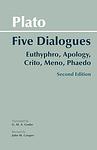
4. Apology
This philosophical text is a dialogue of Socrates' defense in 399 BC against the charges of 'corrupting the young, and by not believing in the gods in whom the city believes, but in other daimonia that are novel.' The dialogue is Socrates' defense at his trial and is his final public statement before his execution. In it, he discusses the moral and philosophical justification for his actions and beliefs, ultimately leading to his conviction and death.
The 1156th Greatest Book of All TimePurchase from Bookshop.org or Amazon -
5. Phaedo
On the Soul
"Phaedo" is a philosophical dialogue that takes place in ancient Greece, where the main character, a philosopher, is awaiting his execution. The story is a discussion on the nature of the afterlife, the immortality of the soul, and the theory of forms. The philosopher argues that the soul is immortal and that we should not fear death. He also discusses his theory of forms, stating that the world we perceive is merely a shadow of the true world of forms. The dialogue ends with the philosopher calmly accepting his fate, illustrating his belief in the immortality of the soul.
The 1647th Greatest Book of All TimePurchase from Bookshop.org or Amazon -
6. Phaedrus
Phaedrus is a Socratic dialogue that discusses topics such as love, the nature of the soul, and the art of rhetoric. The narrative begins with a myth about the chariot of the soul, then moves on to a discussion about the nature of love, particularly focusing on the concept of divine madness. The dialogue then transitions into a discussion about rhetoric and writing, debating the merits and pitfalls of both. The dialogue concludes with a critique of the art of rhetoric, arguing that true rhetoric must be based on truth and knowledge rather than manipulation and deceit.
The 2423rd Greatest Book of All TimePurchase from Bookshop.org or Amazon -
7. Crito
"Crito" is a philosophical dialogue where the main character, a renowned philosopher, is in prison awaiting execution and is visited by his friend, Crito, who urges him to escape. The philosopher argues that since the laws of Athens have given him life, education, and many other benefits, it would be unjust for him to break those laws by escaping. The dialogue explores themes of justice, law, obligation, and the social contract.
The 7021st Greatest Book of All TimePurchase from Bookshop.org or Amazon -
8. The Last Days Of Socrates
This philosophical work delves into the final days of a revered Athenian philosopher, capturing his trial, imprisonment, and ultimate execution. Through a series of dialogues, the narrative explores profound themes such as justice, morality, and the pursuit of truth. The protagonist's unwavering commitment to his principles, even in the face of death, serves as a testament to his enduring legacy and the power of reasoned discourse. The text invites readers to reflect on the nature of wisdom and the ethical responsibilities of individuals within society.
The 8334th Greatest Book of All TimePurchase from Bookshop.org or Amazon -
9. Euthyphro
"Euthyphro" is a philosophical dialogue that takes place in the weeks leading up to the trial of Socrates, where Socrates and Euthyphro engage in a conversation about the nature of piety. The dialogue begins with Socrates questioning Euthyphro about his decision to prosecute his own father for the murder of a slave. This leads to a discussion about what is considered holy and the nature of the gods. Despite their lengthy conversation, the two philosophers never arrive at a definitive answer, leaving the question of what constitutes true piety unresolved.
The 8512th Greatest Book of All TimePurchase from Bookshop.org or Amazon -
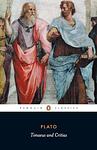
10. Timaeus
The book is a philosophical dialogue that explores the nature of the physical world and human beings. It presents a cosmological account of the universe's creation, describing it as a living being with a soul, crafted by a divine craftsman. The dialogue delves into the elements that constitute the world, the nature of the soul, and the relationship between the eternal and the temporal. It also touches on themes of order, harmony, and the role of reason in understanding the cosmos, offering a blend of myth and philosophy to explain the structure and purpose of the universe.
The 11538th Greatest Book of All TimePurchase from Bookshop.org or Amazon -
11. Gorgias
The book is a Socratic dialogue that explores the nature and value of rhetoric and its relationship to justice. Through a series of conversations between Socrates and several interlocutors, including the sophist Gorgias, the text examines whether rhetoric is a true art form or merely a means of persuasion without regard for truth. Socrates challenges the moral implications of using rhetoric to manipulate public opinion and argues for the pursuit of truth and virtue over the pursuit of power and success. The dialogue ultimately questions the ethical responsibilities of those who wield rhetorical skills and the impact of rhetoric on the soul and society.
The 15741st Greatest Book of All TimePurchase from Amazon -
12. Meno
In this philosophical dialogue, Socrates engages in a conversation with Meno, who poses the question of whether virtue can be taught. Through a series of probing questions and discussions, Socrates explores the nature of virtue, knowledge, and the process of learning. The dialogue introduces the concept of recollection, suggesting that knowledge is innate and can be brought to consciousness through proper questioning. The conversation also touches on the distinction between true belief and knowledge, ultimately leaving the question of virtue's teachability unresolved, while encouraging deeper reflection on the nature of human understanding and moral excellence.
The 16596th Greatest Book of All Time -
13. Protagoras
The dialogue explores the nature of virtue and whether it can be taught, featuring a conversation between Socrates and the sophist Protagoras. Through a series of arguments and discussions, Socrates challenges Protagoras' views on the teachability of virtue, examining the unity and interdependence of virtues such as wisdom, courage, and justice. The dialogue delves into the philosophical underpinnings of moral education and the complexities of human knowledge, ultimately leaving the question open-ended and encouraging readers to ponder the nature of virtue themselves.
The 16754th Greatest Book of All Time -
14. Parmenides
The book is a philosophical dialogue that explores the nature of reality and the concept of being through a conversation between the young Socrates and the elder philosopher Parmenides. It delves into complex metaphysical themes, challenging the theory of forms and examining the limitations of human understanding. The dialogue presents a series of paradoxes and arguments that question the coherence of the forms, ultimately leaving readers with profound questions about the nature of existence and knowledge.
The 17051st Greatest Book of All TimePurchase from Amazon