Stanislaw Lem
Stanisław Lem was a Polish writer of science fiction, philosophy, and satire. He is best known for his novel 'Solaris' and is considered one of the most influential science fiction authors of the 20th century.
Books
This list of books are ONLY the books that have been ranked on the lists that are aggregated on this site. This is not a comprehensive list of all books by this author.
-
1. Solaris
The novel is a psychological exploration of human limitations and failures set against the backdrop of space exploration. When a psychologist arrives at a research station orbiting a distant planet covered entirely by a sentient ocean, he discovers the crew in disarray, haunted by physical manifestations of their subconscious fears and desires. As he grapples with the ocean's inscrutable nature and its unsettling ability to materialize human thoughts, he is forced to confront his own guilt and regret, embodied by the apparition of his deceased wife. The story is a philosophical meditation on the impossibility of truly understanding alien intelligence and the painful isolation of the human condition.
The 327th Greatest Book of All TimePurchase from Bookshop.org or Amazon -
2. The Futurological Congress
From the Memoirs of Ijon Tichy
In a dystopian future, the protagonist attends a scientific conference where he is exposed to a new hallucinogenic drug that transports him to a surreal and chaotic world. As he navigates through this bizarre reality, he becomes entangled in a conspiracy involving mind-altering technology, political manipulation, and the struggle for power. This satirical novel explores themes of reality, identity, and the dangers of unchecked technological advancements.
The 2236th Greatest Book of All TimePurchase from Bookshop.org or Amazon -
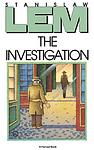
3. The Investigation
"The Investigation" is a philosophical detective novel that delves into the bizarre occurrences of inexplicable human body disappearances from morgues across England. The protagonist, a young Scotland Yard lieutenant, is tasked with unraveling the mystery, which challenges the boundaries of reality and the rationality of scientific explanation. As the investigation unfolds, the narrative explores themes of existentialism, the nature of the universe, and the limits of human understanding, ultimately leaving readers questioning the very fabric of existence and the possibility of supernatural phenomena.
The 6789th Greatest Book of All TimePurchase from Amazon -
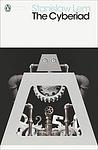
4. The Cyberiad
Fables for the Cybernetic Age
"The Cyberiad" is a collection of science fiction short stories that take place in a futuristic universe where robots and artificial intelligence are prevalent. The book follows the adventures of two master inventors, Trurl and Klapaucius, as they encounter various challenges and engage in extraordinary feats of engineering and problem-solving. Through witty and imaginative storytelling, the book explores themes of technology, creativity, and the nature of humanity, offering a captivating and thought-provoking reading experience.
The 13920th Greatest Book of All TimePurchase from Amazon -
5. The Chain Of Chance

A medically trained investigator becomes fixated on a puzzling series of corpses of young women found along a stretch of coast and sets out to determine whether they are the work of a serial killer or the product of statistical fluke; blending forensic detail, statistical reasoning, and detective techniques, the narrative alternates careful technical inquiry with philosophical reflection on probability, causation, and the human need to impose meaningful patterns on randomness, leading to a disquieting conclusion that challenges assumptions about explanation and responsibility.
The 15886th Greatest Book of All TimePurchase from Bookshop.org -
6. Niezwyciężony
The Invincible (Polish: Niezwyciężony) is a hard science fiction novel by Polish writer Stanisław Lem, serialized in Gazeta Bialostocka in 1963 and published as a book in 1964. The Invincible originally appeared as the title story in Lem's collection Niezwyciężony i inne opowiadania ("The Invincible and Other Stories"). A translation into German was published in 1967; an English translation by Wendayne Ackerman, based on the German one, was published in 1973. A direct translation into English from Polish, by Bill Johnston, was published in 2006. It was one of the first novels to explore the ideas of microrobots, smartdust, artificial swarm intelligence, and "necroevolution" (a term suggested by Lem in the novel for the evolution of non-living matter).
The 17145th Greatest Book of All Time