James Gleick
James Gleick is an American author and historian of science. He is known for his books on the history of science and technology, including 'Chaos: Making a New Science' and 'The Information: A History, a Theory, a Flood.'
Books
This list of books are ONLY the books that have been ranked on the lists that are aggregated on this site. This is not a comprehensive list of all books by this author.
-
1. Chaos
Making a New Science
This book delves into the complex world of chaos theory, a branch of mathematics that studies the behavior of dynamic systems highly sensitive to initial conditions, often referred to as the butterfly effect. Through engaging storytelling, the narrative explores the pioneering work of scientists who uncovered patterns in what seemed to be randomness, from weather systems to population growth. It charts the evolution of chaos theory from a scientific curiosity to a field that has profound implications across disciplines, offering insights into the inherent unpredictability of nature and the universe. The book makes a compelling case for the beauty and universality of chaos, transforming how we understand the interconnectedness of the world around us.
The 1474th Greatest Book of All TimePurchase from Bookshop.org or Amazon -
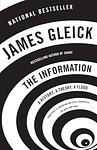
2. The Information
A History, a Theory, a Flood
"The Information" explores the history and significance of information, from its origins in the form of language and writing to the modern digital age. James Gleick delves into the profound impact of information on society, science, and technology, highlighting key figures such as Claude Shannon and Alan Turing. Through captivating anecdotes and thought-provoking analysis, Gleick reveals how information has shaped our understanding of the world and revolutionized communication, ultimately challenging our notions of knowledge and reality.
The 9699th Greatest Book of All TimePurchase from Bookshop.org or Amazon -
3. Isaac Newton
A Biography
The book provides a comprehensive and insightful exploration of the life and work of one of history's most influential scientists. It delves into his groundbreaking contributions to mathematics, physics, and astronomy, including his development of calculus and the laws of motion and universal gravitation. The narrative also examines his complex personality, his intense focus on his studies, and his sometimes tumultuous relationships with contemporaries. Through meticulous research, the book paints a vivid portrait of a man whose intellectual pursuits laid the foundation for modern science, while also highlighting the personal and historical context in which he lived and worked.
The 17161st Greatest Book of All TimePurchase from Amazon