The Spoils of Poynton by Henry James
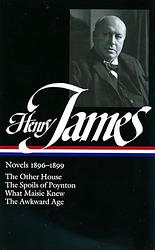

"The Spoils of Poynton" is a novel about a young woman named Fleda Vetch who becomes embroiled in a dispute over an impressive collection of art and antiques, known as the 'spoils', at the Poynton estate. Mrs. Gereth, the current owner of the spoils, wants to prevent her son Owen from inheriting them due to his engagement to a woman she deems unworthy. Fleda, who is in love with Owen, is caught in the middle of this conflict, leading to a dramatic exploration of morality, aesthetic appreciation, and the complexities of love and possession.
The 13557th greatest book of all time
Ranking Details:
Our ranking system awards points to books based on their appearance and position on curated lists. Here's how it works:
Unranked Lists: For lists without specific rankings, each book receives points equivalent to the list's weight. This approach recognizes the book's inclusion on prestigious lists.
Ranked Lists: Books on ranked lists receive points in two ways:
- Base Points: Initially, every book is awarded points equal to the list's weight, acknowledging its significance.
- Bonus Points: Additionally, books earn bonus points based on their ranking. The total bonus pool, equal to 100% of the list's weight, is distributed among the books, with higher-ranked books receiving more points.
Exponential Distribution: The distribution of bonus points follows an exponential model. This means the top-ranked book (#1) receives significantly more bonus points than those further down the list (e.g., #100). Our algorithm ensures that higher placements are rewarded more generously, reflecting the achievement of a top rank on any given list.
This scoring system ensures that each book's ranking reflects both its presence on multiple lists and its positions within those lists, providing a comprehensive measure of its acclaim and popularity.
List Date Penalty Feature
In our continuous effort to provide the most accurate and fair rankings, we have introduced a new feature: the List Date Penalty. This feature aims to reduce recency bias in our rankings by applying a penalty to books based on their publication dates relative to the list's publication date.
How It Works
- Publication Date Comparison: For each book on a list, we compare its publication date to the publication date of the list.
-
Penalty Application:
- Maximum Penalty: If a book was published in the same year as the list, it receives the maximum penalty, as we believe it hasn't had enough time to stand the test of time.
- Proportional Penalty: Books that were published in the years leading up to the list's publication date receive a proportional penalty based on the number of years they have been available.
- No Penalty: Books that were published more than a specified number of years (max age for penalty) before the list's publication date do not receive any penalty, acknowledging their enduring relevance and influence.
Why This Matters
By mitigating recency bias, the List Date Penalty feature helps to ensure that books that have had more time to be evaluated by readers and critics are given their due weight. This results in a more equitable and historically balanced ranking that truly reflects the greatest books of all time.
Total Points: 5
This book was first published in 1897
1 Lists
- score: 10 -- The 100 Greatest Novels - 2007 (Weight: 10)