Die Wise by Stephen Jenkinson
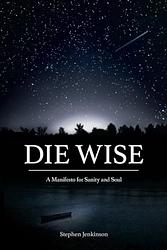
The book in question is a profound meditation on the necessity of acknowledging and accepting death as an intrinsic part of life. It challenges the modern denial of death and the prevalent notion of "dying well." Through a blend of storytelling, wisdom, and cultural critique, the author, who has worked extensively in palliative care, argues for a radical shift in how we perceive and approach the end of life. He advocates for a deep responsibility to dying people and a reimagined relationship with death that involves wisdom, community, and a recognition of its place in the natural order of things. The book serves as a call to awaken to the ways in which our cultural practices often leave us ill-prepared for the inevitable journey of dying, urging readers to live and die with a sense of true understanding and purpose.
The 17165th greatest book of all time
Ranking Details:
Our ranking system awards points to books based on their appearance and position on curated lists. Here's how it works:
Unranked Lists: For lists without specific rankings, each book receives points equivalent to the list's weight. This approach recognizes the book's inclusion on prestigious lists.
Ranked Lists: Books on ranked lists receive points in two ways:
- Base Points: Initially, every book is awarded points equal to the list's weight, acknowledging its significance.
- Bonus Points: Additionally, books earn bonus points based on their ranking. The total bonus pool, equal to 100% of the list's weight, is distributed among the books, with higher-ranked books receiving more points.
Exponential Distribution: The distribution of bonus points follows an exponential model. This means the top-ranked book (#1) receives significantly more bonus points than those further down the list (e.g., #100). Our algorithm ensures that higher placements are rewarded more generously, reflecting the achievement of a top rank on any given list.
This scoring system ensures that each book's ranking reflects both its presence on multiple lists and its positions within those lists, providing a comprehensive measure of its acclaim and popularity.
List Date Penalty Feature
In our continuous effort to provide the most accurate and fair rankings, we have introduced a new feature: the List Date Penalty. This feature aims to reduce recency bias in our rankings by applying a penalty to books based on their publication dates relative to the list's publication date.
How It Works
- Publication Date Comparison: For each book on a list, we compare its publication date to the publication date of the list.
-
Penalty Application:
- Maximum Penalty: If a book was published in the same year as the list, it receives the maximum penalty, as we believe it hasn't had enough time to stand the test of time.
- Proportional Penalty: Books that were published in the years leading up to the list's publication date receive a proportional penalty based on the number of years they have been available.
- No Penalty: Books that were published more than a specified number of years (max age for penalty) before the list's publication date do not receive any penalty, acknowledging their enduring relevance and influence.
Why This Matters
By mitigating recency bias, the List Date Penalty feature helps to ensure that books that have had more time to be evaluated by readers and critics are given their due weight. This results in a more equitable and historically balanced ranking that truly reflects the greatest books of all time.
Total Points: 0
This book was first published in 2015
1 Lists
- score: 1 -- Our Users' Honorable Mention Favorite Books of All Time - 2024 (Weight: 1)