Bright Air, Brilliant Fire by Gerald M. Edelman

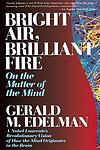
"Bright Air, Brilliant Fire" explores the complex science of human consciousness through a biological perspective. The book challenges traditional views by proposing that the mind's workings are grounded in the architecture and dynamics of the brain. The author, a Nobel laureate, uses his theory of Neural Darwinism to explain how mental phenomena emerge not from simple linear processes but through the rich interactions of a vast network of neurons. This theory suggests that the brain's structure evolves through a selection process akin to natural selection, leading to the diverse and adaptive nature of human consciousness. The book combines detailed scientific explanations with broader philosophical discussions on the nature of mind and self.
The 16538th greatest book of all time
Ranking Details:
Our ranking system awards points to books based on their appearance and position on curated lists. Here's how it works:
Unranked Lists: For lists without specific rankings, each book receives points equivalent to the list's weight. This approach recognizes the book's inclusion on prestigious lists.
Ranked Lists: Books on ranked lists receive points in two ways:
- Base Points: Initially, every book is awarded points equal to the list's weight, acknowledging its significance.
- Bonus Points: Additionally, books earn bonus points based on their ranking. The total bonus pool, equal to 100% of the list's weight, is distributed among the books, with higher-ranked books receiving more points.
Exponential Distribution: The distribution of bonus points follows an exponential model. This means the top-ranked book (#1) receives significantly more bonus points than those further down the list (e.g., #100). Our algorithm ensures that higher placements are rewarded more generously, reflecting the achievement of a top rank on any given list.
This scoring system ensures that each book's ranking reflects both its presence on multiple lists and its positions within those lists, providing a comprehensive measure of its acclaim and popularity.
Total Points: 0
This book was first published in 1992
1 Lists
- score: 1 -- 1,000 Books to Read Before You Die: A Life-Changing List - 2018 (Weight: 1)