The Anthropic Cosmological Principle by John D. Barrow, Frank J. Tipler
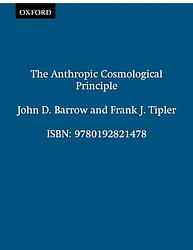
The book explores the Anthropic Cosmological Principle, which posits that the universe's laws, constants, and conditions appear finely tuned to allow for the existence of life, particularly human life. It delves into various scientific disciplines, including cosmology, quantum physics, and biology, to discuss how life influences the universe's structure. The authors examine both weak and strong versions of the principle, discussing philosophical and theological implications, and argue that the universe is uniquely suited for the emergence of intelligent beings who are capable of observing and understanding it. This interdisciplinary approach offers insights into the relationship between complex life and the cosmos's fundamental characteristics.
The 20192nd greatest book of all time
Ranking Details:
Our ranking system awards points to books based on their appearance and position on curated lists. Here's how it works:
Unranked Lists: For lists without specific rankings, each book receives points equivalent to the list's weight. This approach recognizes the book's inclusion on prestigious lists.
Ranked Lists: Books on ranked lists receive points in two ways:
- Base Points: Initially, every book is awarded points equal to the list's weight, acknowledging its significance.
- Bonus Points: Additionally, books earn bonus points based on their ranking. The total bonus pool, equal to 100% of the list's weight, is distributed among the books, with higher-ranked books receiving more points.
Exponential Distribution: The distribution of bonus points follows an exponential model. This means the top-ranked book (#1) receives significantly more bonus points than those further down the list (e.g., #100). Our algorithm ensures that higher placements are rewarded more generously, reflecting the achievement of a top rank on any given list.
This scoring system ensures that each book's ranking reflects both its presence on multiple lists and its positions within those lists, providing a comprehensive measure of its acclaim and popularity.
Total Points: 0
This book was first published in 1986
1 Lists
- score: 1 -- Our Users' Honorable Mention Favorite Books of All Time - 2024 (Weight: 1)