What Color Is Your Parachute? by Richard Nelson Bolles

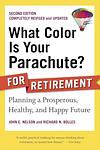
What Color Is Your Parachute? is a self-help book by Richard Nelson Bolles intended for job-seekers. It has been in print since 1970 and has been revised annually since 1975, sometimes substantially. Bolles initially self-published the book on December 1, 1970, and it has been commercially published since November 1972 by Ten Speed Press in Berkeley, California. As of September 28, 2010, the book is available in 22 languages and used in 26 countries around the world. Over ten million copies have been sold worldwide. It is one of the most highly regarded career advice books in print. In the 2014 edition of the book, Bolles writes about how to adapt one's job search to the Internet age. The book recommends networking to find "the person with the authority to hire you", rather than sending out resumes in bulk, shotgun fashion. It also recommends carefully figuring out what one is best at and what one enjoys most, which Bolles asserts tend to coincide. The Flower Exercise is a key element of the book, featuring seven ways that job seekers can define themselves in order to inform their job search. Years later, Bolles explained the book's memorable title as his response at a business meeting in 1968 when someone told him that he and several co-workers were "bailing out" of a failing organization, prompting Bolles to joke, "What color is your parachute?". "The question was just a joke," he said. "I had no idea that it would take on all this additional meaning."
The 5535th greatest book of all time
Ranking Details:
Our ranking system awards points to books based on their appearance and position on curated lists. Here's how it works:
Unranked Lists: For lists without specific rankings, each book receives points equivalent to the list's weight. This approach recognizes the book's inclusion on prestigious lists.
Ranked Lists: Books on ranked lists receive points in two ways:
- Base Points: Initially, every book is awarded points equal to the list's weight, acknowledging its significance.
- Bonus Points: Additionally, books earn bonus points based on their ranking. The total bonus pool, equal to 100% of the list's weight, is distributed among the books, with higher-ranked books receiving more points.
Exponential Distribution: The distribution of bonus points follows an exponential model. This means the top-ranked book (#1) receives significantly more bonus points than those further down the list (e.g., #100). Our algorithm ensures that higher placements are rewarded more generously, reflecting the achievement of a top rank on any given list.
This scoring system ensures that each book's ranking reflects both its presence on multiple lists and its positions within those lists, providing a comprehensive measure of its acclaim and popularity.
Total Points: 80
This book was first published in 1970
2 Lists
- score: 106 -- IWU Select 100 Must-Read Books - 1991 (Weight: 100)
- score: 1 -- Time Magazine's All-TIME 100 Best Non-Fiction Books - 2011 (Weight: 1)