The Greatest Books of All Time on Empiricism
Click to learn how this list is calculated.
This list represents a comprehensive and trusted collection of the greatest books. Developed through a specialized algorithm, it brings together 759 'best of' book lists to form a definitive guide to the world's most acclaimed books. For those interested in how these books are chosen, additional details can be found on the rankings page.
What should I read next?
Get personalized book recommendations based on your reading history and preferences. Our algorithm analyzes your favorite books and reading patterns to suggest your next great read.
Get RecommendationsGenres
Countries
Date Range
Filter books by their publication year. Enter the earliest year (Start) and latest year (End) to find books published within that period. Leave either field empty to search from the beginning of time or up to the present day.
Reading Statistics
Click the button below to see how many of these books you've read!
Download
If you're interested in downloading this list as a CSV file for use in a spreadsheet application, you can easily do so by clicking the button below. Please note that to ensure a manageable file size and faster download, the CSV will include details for only the first 500 books.
DownloadTo download this list as a CSV file, please log in to your account. Once logged in, you'll be able to download the data for use in spreadsheet applications.
Login to Download-
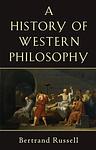
1. A History of Western Philosophy by Bertrand Russell
And Its Connection with Political and Social Circumstances from the Earliest Times to the Present Day
This book provides a comprehensive overview of Western philosophy from the pre-Socratic philosophers through the Middle Ages and the Renaissance, up to the early 20th century. It examines the ideas and contributions of major philosophers, including Plato, Aristotle, Descartes, Spinoza, Leibniz, Locke, Hume, Kant, and others, while also exploring the cultural and historical context in which their thoughts developed. The work is known for its accessible prose and critical perspective, as it not only presents philosophical concepts but also offers the author's analysis and interpretation of these ideas, highlighting their relevance to the broader sweep of human thought and society.
The 1526th Greatest Book of All TimePurchase from Bookshop.org or Amazon -
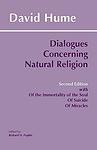
2. Dialogues Concerning Natural Religion by David Hume
This philosophical work is a series of discussions between three characters who explore the nature of God's existence through the lens of empirical evidence and reason. The dialogues delve into arguments for and against the existence of a divine creator, touching on the problem of evil, the argument from design, and the limits of human understanding. Through these conversations, the text critically examines the rational basis for religious belief, questioning the traditional arguments for God's existence and highlighting the complexities and contradictions inherent in theological explanations of the universe. The work is a seminal contribution to the philosophy of religion, showcasing the author's skepticism towards religious dogma and his commitment to empirical inquiry.
The 1746th Greatest Book of All TimePurchase from Bookshop.org or Amazon -
3. An Enquiry Concerning Human Understanding by David Hume
A Treatise of Human Nature
This philosophical work explores the nature of human knowledge, arguing that all of our understanding comes from experience rather than innate ideas. The author challenges the idea of causality, suggesting that our belief in cause and effect is based on habit rather than logical reasoning. The book also discusses the limitations of human understanding, including the inability to fully comprehend the concept of God or the soul, and the impossibility of certain knowledge. The author's skepticism about traditional philosophical concepts has had a significant influence on later philosophers and the field of epistemology.
The 1997th Greatest Book of All TimePurchase from Bookshop.org or Amazon -
4. A Treatise of Human Nature by David Hume
Being an Attempt to Introduce the Experimental Method of Reasoning into Moral Subjects
This philosophical work delves into the understanding of human nature, focusing on the mind, emotions, and morality. The author argues that all of our thoughts and ideas are derived from our senses and experiences, rejecting the idea of innate ideas. He also debates the nature of causality, the existence of the self, and the basis of moral judgments. The work is a comprehensive exploration of empiricism, skepticism, and naturalism.
The 2240th Greatest Book of All TimePurchase from Bookshop.org or Amazon -
5. The Logic of Scientific Discovery by Karl Popper
This book is a significant work in the philosophy of science, proposing a methodology for scientific discovery that challenges traditional inductive reasoning. The author argues that scientific theories can never be proven definitively, but can only be corroborated or falsified through empirical testing. He introduces the concept of falsifiability as the key criterion for distinguishing scientific theories from non-scientific ones. The book also delves into the problems of induction, demarcation, and the relationship between theory and observation in scientific practice.
The 5523rd Greatest Book of All TimePurchase from Bookshop.org or Amazon -
6. Language, Truth, And Logic by A. J. Ayer
This philosophical work is a cornerstone of logical positivism, presenting a rigorous critique of metaphysics and a fervent advocacy for the verification principle as the only meaningful way of establishing the truth value of statements. The author argues that statements are only meaningful if they can be empirically verified or are tautological in nature, thereby dismissing a vast swath of traditional philosophy as nonsensical. Through this lens, the book explores the implications of this viewpoint for ethics, theology, and the arts, ultimately asserting that many of the questions these fields grapple with are not just unsolvable, but fundamentally flawed in their premises.
The 6516th Greatest Book of All TimePurchase from Bookshop.org or Amazon -
7. A History of Philosophy by Frederick Charles Copleston
This book is a comprehensive overview of Western philosophy, starting from the Pre-Socratic philosophers to contemporary thinkers. It meticulously traces the evolution of philosophical thought, providing in-depth analysis of key figures and their contributions. The book also critically examines various philosophical doctrines, their influences, and their relevance to contemporary society. It's a valuable resource for anyone interested in understanding the origins, developments, and complexities of philosophical ideas.
The 10246th Greatest Book of All TimePurchase from Bookshop.org or Amazon -
8. A Treatise Concerning the Principles of Human Knowledge by George Berkeley
Wherein the chief causes of error and difficulty in the Sciences, with the grounds of Scepticism, Atheism, and Irreligion, are inquired into
This philosophical work challenges the idea of materialism, arguing that objects only exist as a perception of the mind. The author asserts that we can only directly know sensations and ideas of objects, not the objects themselves. He also discusses the role of God, suggesting that our perceptions are dependent on the will of a higher power. The text is a significant contribution to the field of metaphysics and epistemology, offering a unique perspective on the nature of human knowledge and perception.
The 10634th Greatest Book of All TimePurchase from Amazon -
9. The Course in Positive Philosophy by Auguste Comte

"The Course in Positive Philosophy" is a philosophical work that introduces and elaborates on the concept of positivism, a belief system that emphasizes empirical science and factual knowledge. The author argues that society has passed through three stages: theological, metaphysical, and positive, with the positive stage being the most advanced and accurate. He asserts that all knowledge must come from observable phenomena and scientific inquiry, rejecting metaphysics and theology. The book is a cornerstone of modern sociology and philosophy, influencing many later thinkers.
The 11547th Greatest Book of All Time -
10. A System Of Logic by John Stuart Mill
Ratiocinative and Inductive
"A System of Logic" is a comprehensive treatise on the principles and methods of scientific reasoning. The book elaborates on the nature of logic and its relation to truth, knowledge, and human understanding. It systematically explores the process of human thought and the structure of logical argumentation, distinguishing between deductive and inductive reasoning. The work also discusses the application of logic to the natural and social sciences, emphasizing the importance of empirical evidence and the scientific method in establishing valid conclusions. Through its rigorous analysis, the book aims to lay the foundations for sound reasoning and empirical inquiry, influencing the development of modern logic and philosophy.
The 13362nd Greatest Book of All TimePurchase from Amazon -
11. Behaviorism by John Watson
An Introduction to Comparative Psychology
"Behaviorism" is a seminal work in psychology that introduces and explores the theory of behaviorism, a school of thought that emphasizes the importance of observable behavior over internal mental states. The book argues that psychology should be seen as a purely objective experimental branch of natural science, with its theoretical goal being the prediction and control of behavior. The author also discusses various aspects of behavior, including emotions and thought processes, in the context of this theory.
The 15916th Greatest Book of All TimePurchase from Bookshop.org or Amazon -
12. Rules Of Sociological Method by Emile Durkheim
and Selected Texts on Sociology and its Method
"Rules of Sociological Method" is a foundational text that outlines the principles and approaches necessary for the study of sociology. The book emphasizes the importance of treating social facts as things, which are external and coercive forces that can be studied objectively. The author argues for the necessity of establishing sociology as a scientific discipline with its own distinct methods and object of study, separate from psychology and philosophy. He advocates for the use of empirical data to understand social phenomena and introduces concepts such as the normal and the pathological to distinguish between typical and deviant social behaviors. This work is crucial for understanding the methodological framework that underpins sociological analysis and research.
The 15916th Greatest Book of All TimePurchase from Bookshop.org or Amazon -
13. Advancement Of Learning by Francis Bacon
Or, The Partitions of Sciences
"Advancement of Learning" is a philosophical treatise that explores the limitations and advancements in various fields of learning and knowledge. The work advocates for the empirical approach to scientific inquiry, emphasizing observation and experimentation as the core methods for gaining true understanding. The author critiques the prevailing scholastic education system, which he finds overly reliant on tradition and the authority of ancient texts. He proposes a new methodological framework for learning, which later influenced the development of the scientific method. This treatise is a foundational text in the philosophy of science, promoting the idea that knowledge should progress through inductive reasoning and the systematic collection of facts.
The 15916th Greatest Book of All TimePurchase from Amazon -
14. Common Sense, Science, And Scepticism by Alan Musgrave
A Historical Introduction to the Theory of Knowledge
This book critically examines the foundations of knowledge, blending philosophy with practical reasoning to navigate the concepts of common sense and scientific skepticism. It challenges readers to question how we distinguish between what is considered 'common sense' and what is scientifically proven, delving into the philosophical underpinnings of skepticism itself. Through a rigorous analysis, the text explores the limits and strengths of human understanding, encouraging a thoughtful reconsideration of how we accept or reject information in the realms of science and everyday life. It serves as both an introduction to philosophical skepticism and a deep dive into the epistemological questions that underlie our quest for knowledge.
The 17163rd Greatest Book of All TimePurchase from Amazon -
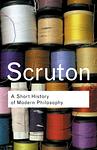
15. A Short History Of Modern Philosophy by Roger Scruton
From Descartes to Wittgenstein
This book provides a concise overview of modern philosophy, tracing its development from the early 17th century to the mid-20th century. It explores the key ideas, debates, and philosophers who have shaped modern thought, starting with René Descartes and progressing through significant figures such as Spinoza, Leibniz, Kant, Hegel, and Wittgenstein. The text examines how these thinkers addressed fundamental questions in metaphysics, epistemology, and ethics, while also considering the historical context that influenced their work. This exploration not only highlights the evolution of philosophical ideas but also illustrates the ongoing dialogue between philosophy and the broader cultural and scientific changes of the modern era.
The 17163rd Greatest Book of All TimePurchase from Amazon -
16. Worldviews by Richard DeWitt
An Introduction to the History and Philosophy of Science
This book offers a comprehensive exploration of the evolution of scientific thought, examining how different worldviews have shaped our understanding of the universe. It delves into the historical development of key scientific concepts, from the ancient Greek philosophers to the modern scientific revolution, highlighting the shifts in perspective that have occurred over time. Through a clear and engaging narrative, the book provides readers with insights into the philosophical underpinnings of science, encouraging a deeper appreciation of how our current worldview has been influenced by past ideas and discoveries.
The 17163rd Greatest Book of All TimePurchase from Bookshop.org





Reading Statistics
Click the button below to see how many of these books you've read!
Download
If you're interested in downloading this list as a CSV file for use in a spreadsheet application, you can easily do so by clicking the button below. Please note that to ensure a manageable file size and faster download, the CSV will include details for only the first 500 books.
DownloadTo download this list as a CSV file, please log in to your account. Once logged in, you'll be able to download the data for use in spreadsheet applications.
Login to Download