The Greatest Books of All Time on Phenomenology
Click to learn how this list is calculated.
This list represents a comprehensive and trusted collection of the greatest books. Developed through a specialized algorithm, it brings together 759 'best of' book lists to form a definitive guide to the world's most acclaimed books. For those interested in how these books are chosen, additional details can be found on the rankings page.
What should I read next?
Get personalized book recommendations based on your reading history and preferences. Our algorithm analyzes your favorite books and reading patterns to suggest your next great read.
Get RecommendationsGenres
Countries
Date Range
Filter books by their publication year. Enter the earliest year (Start) and latest year (End) to find books published within that period. Leave either field empty to search from the beginning of time or up to the present day.
Reading Statistics
Click the button below to see how many of these books you've read!
Download
If you're interested in downloading this list as a CSV file for use in a spreadsheet application, you can easily do so by clicking the button below. Please note that to ensure a manageable file size and faster download, the CSV will include details for only the first 500 books.
DownloadTo download this list as a CSV file, please log in to your account. Once logged in, you'll be able to download the data for use in spreadsheet applications.
Login to Download-
1. Being and Time by Martin Heidegger
Being and Time is a seminal work that explores the concept of "being" through a detailed analysis of human existence. The book delves into existential and phenomenological thought, examining how humans relate to the world and their own existence. The author argues that people are always "being-in-the-world" and that understanding this fundamental state is crucial to comprehending the broader concept of being. The work also introduces the concept of "Dasein," a term used to describe the specific type of being that humans possess.
The 517th Greatest Book of All TimePurchase from Bookshop.org or Amazon -
2. The Crisis of European Sciences and Transcendental Phenomenology by Edmund Husserl
An Introduction to Phenomenological Philosophy
This book is a philosophical work that explores the crisis facing the sciences in Europe, arguing that this crisis stems from the disregard for transcendental phenomenology. The author asserts that the sciences have lost their grounding in the world of lived experience and have become too abstract and disconnected from human life, leading to a crisis of meaning. He proposes a return to the "lifeworld" and a recentering of science on human experience, using the methods of phenomenology to uncover the essential structures of consciousness and the world.
The 2564th Greatest Book of All TimePurchase from Bookshop.org or Amazon -
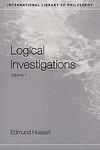
3. Logical Investigations by Edmund Husserl
Prolegomena to Pure Logic
This seminal work is a foundational text in the field of phenomenology and philosophy, presenting a rigorous critique of psychologism—the view that logic is a part of psychology—and arguing for the independence and objectivity of logical truths. Through a series of detailed investigations, the author explores the nature of meaning, the structure of consciousness, and the relationship between language and logic. By distinguishing between the act of thinking and the content of thought, the work lays the groundwork for a new science of consciousness and establishes the author as a pivotal figure in 20th-century philosophy. The text is notable for its methodical approach and its significant influence on both the analytic and continental traditions in philosophy.
The 2635th Greatest Book of All TimePurchase from Bookshop.org or Amazon -
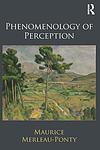
4. Phenomenology Of Perception by Maurice Merleau-Ponty
This philosophical work delves into the nature of perception and its role in understanding human existence. The author challenges traditional notions of objective knowledge, arguing instead for the primacy of perception as the basis for experiencing the world. Through a detailed analysis of the body and its relationship to space and time, the text explores how subjective experiences shape our understanding of reality. The author critiques the Cartesian separation of mind and body, proposing a more integrated approach that emphasizes the interconnectedness of the physical and the mental in constituting human experience. This seminal work offers a profound insight into the complexities of perception, consciousness, and the embodied nature of human existence.
The 6576th Greatest Book of All TimePurchase from Bookshop.org or Amazon -
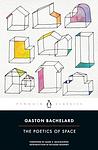
5. The Poetics Of Space by Gaston Bachelard
The Classic Look at How We Experience Intimate Places
"The Poetics of Space" explores the relationship between spaces and the human psyche, particularly focusing on the importance and symbolism of intimate spaces like houses, rooms, and corners. The book delves into the philosophy and psychology of architecture, using poetic imagery and phenomenology to examine how people experience and inhabit personal spaces. It argues that these spaces hold deep emotional significance and that understanding them can reveal insights about memory, imagination, and the essence of being. Through its analysis, the text invites readers to reconsider the ordinary environments of daily life as rich landscapes of poetic expression and emotional depth.
The 6617th Greatest Book of All TimePurchase from Bookshop.org or Amazon -
6. Ideas by Edmund Husserl
General Introduction to Pure Phenomenology
This philosophical work delves into the complex realm of phenomenology, exploring the intricate relationship between consciousness and the objects of its awareness. The author systematically unpacks the concept of intentionality, the idea that consciousness is always consciousness of something, and introduces the method of phenomenological reduction as a means to study the essential structures of consciousness. Through a rigorous examination of the acts of consciousness, including perception, imagination, and judgment, the text seeks to lay bare the foundational elements of human experience, arguing for a direct investigation into the phenomena as they present themselves to consciousness, free from presuppositions. This exploration aims to establish a solid groundwork for understanding the nature of reality as it is experienced, emphasizing the importance of subjective experience in the constitution of the world.
The 8265th Greatest Book of All TimePurchase from Bookshop.org or Amazon -
7. The Apriori Foundations Of The Civil Law by Adolf Reinach
A Study in the Philosophy of Law
"The Apriori Foundations of the Civil Law" is a philosophical exploration of the foundational concepts and a priori principles underlying civil law. The work delves into the nature of legal obligations, property rights, and social interactions, arguing that these elements are rooted in inherent structures of human cognition and social reality rather than merely conventional or constructed systems. By examining the essential characteristics of legal phenomena, the book seeks to establish a universal framework for understanding the principles that govern legal relations and duties, independent of specific legal systems and historical contexts.
The 15923rd Greatest Book of All TimePurchase from Bookshop.org or Amazon -
8. A Short History Of Modern Philosophy by Roger Scruton
From Descartes to Wittgenstein
This book provides a concise overview of modern philosophy, tracing its development from the early 17th century to the mid-20th century. It explores the key ideas, debates, and philosophers who have shaped modern thought, starting with René Descartes and progressing through significant figures such as Spinoza, Leibniz, Kant, Hegel, and Wittgenstein. The text examines how these thinkers addressed fundamental questions in metaphysics, epistemology, and ethics, while also considering the historical context that influenced their work. This exploration not only highlights the evolution of philosophical ideas but also illustrates the ongoing dialogue between philosophy and the broader cultural and scientific changes of the modern era.
The 17174th Greatest Book of All TimePurchase from Amazon -
9. The Visible And The Invisible by Maurice Merleau-Ponty
This philosophical work delves into the intricate relationship between perception and reality, exploring how our sensory experiences shape our understanding of the world. It challenges traditional notions of dualism by proposing that the visible and the invisible are intertwined, suggesting that the unseen aspects of existence are just as significant as the tangible. Through a phenomenological lens, the text examines the interplay between the body and consciousness, emphasizing the fluid and dynamic nature of human experience and perception.
The 17050th Greatest Book of All TimePurchase from Bookshop.org -
10. Fields Of Sense: A New Realist Ontology by Markus Gabriel
A New Realist Ontology

Proposes a pluralist realism in which entities exist within irreducible “fields of sense”—domains of meaning that disclose objects—rather than within a single all-encompassing world. It rejects scientistic naturalism and the notion of a totalized “world,” arguing instead for many ontological domains with their own criteria of existence. By blending phenomenological insights with analytic rigor, it shows how objects can be mind-independent yet accessible only within structures that render them intelligible, reframing debates about correlationism, ontology, and the scope of metaphysics.
The 17174th Greatest Book of All TimePurchase from Bookshop.org -
11. What Is Existential Anthropology? by Michael D. Jackson
A concise manifesto for an anthropology rooted in lived experience, it critiques abstract, system-driven models and centers the ordinary, contingent, and relational facets of life. Emphasizing intersubjectivity, narrative, and the ethical stakes of fieldwork, it shows how people improvise meaning, sustain agency, and endure suffering amid uncertainty. Drawing on existential and phenomenological insights, it reframes ethnography as a collaborative practice of attending to movement, betweenness, and transformative thresholds. The approach privileges practical wisdom over theory, seeking to understand how possibilities are opened and constrained in everyday worlds.
The 17174th Greatest Book of All TimePurchase from Bookshop.org -
12. Lectures On Imagination by Paul Ricoeur
A set of philosophical reflections that reconceives imagination as a productive power mediating between perception, memory, language, and action. Through inquiries into image, metaphor, and narrative, it shows how imaginative redescription opens new possibilities of meaning and reorients practical understanding. It also probes the social and ethical stakes of the imaginary—such as ideology, utopia, critique, and hope—while engaging classical and phenomenological perspectives to explain how images and stories shape subjectivity, interpretation, and the horizon of human action.
The 17174th Greatest Book of All TimePurchase from Bookshop.org



Reading Statistics
Click the button below to see how many of these books you've read!
Download
If you're interested in downloading this list as a CSV file for use in a spreadsheet application, you can easily do so by clicking the button below. Please note that to ensure a manageable file size and faster download, the CSV will include details for only the first 500 books.
DownloadTo download this list as a CSV file, please log in to your account. Once logged in, you'll be able to download the data for use in spreadsheet applications.
Login to Download