The Greatest Books of All Time on Scientific Method
Click to learn how this list is calculated.
This list represents a comprehensive and trusted collection of the greatest books. Developed through a specialized algorithm, it brings together 759 'best of' book lists to form a definitive guide to the world's most acclaimed books. For those interested in how these books are chosen, additional details can be found on the rankings page.
What should I read next?
Get personalized book recommendations based on your reading history and preferences. Our algorithm analyzes your favorite books and reading patterns to suggest your next great read.
Get RecommendationsGenres
The "Scientific Method" category for books encompasses works that delve into the systematic processes and principles used to investigate natural phenomena, acquire new knowledge, and validate or refute hypotheses. These books typically cover the foundational steps of the scientific method, including observation, hypothesis formulation, experimentation, data collection, and analysis, as well as the interpretation and communication of results. They may also explore the historical development of the scientific method, its philosophical underpinnings, and its application across various scientific disciplines. This genre is essential for readers seeking to understand the rigorous methodologies that underpin scientific inquiry and the pursuit of empirical truth.
Countries
Date Range
Filter books by their publication year. Enter the earliest year (Start) and latest year (End) to find books published within that period. Leave either field empty to search from the beginning of time or up to the present day.
Reading Statistics
Click the button below to see how many of these books you've read!
Download
If you're interested in downloading this list as a CSV file for use in a spreadsheet application, you can easily do so by clicking the button below. Please note that to ensure a manageable file size and faster download, the CSV will include details for only the first 500 books.
DownloadTo download this list as a CSV file, please log in to your account. Once logged in, you'll be able to download the data for use in spreadsheet applications.
Login to Download-
1. The Logic of Scientific Discovery by Karl Popper
This book is a significant work in the philosophy of science, proposing a methodology for scientific discovery that challenges traditional inductive reasoning. The author argues that scientific theories can never be proven definitively, but can only be corroborated or falsified through empirical testing. He introduces the concept of falsifiability as the key criterion for distinguishing scientific theories from non-scientific ones. The book also delves into the problems of induction, demarcation, and the relationship between theory and observation in scientific practice.
The 5523rd Greatest Book of All TimePurchase from Bookshop.org or Amazon -
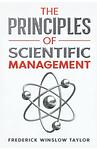
2. The Principles Of Scientific Management by Frederick Winslow Taylor
The book outlines the theory and practice of scientific management, emphasizing the importance of efficiency and productivity in the workplace. It advocates for systematic study of tasks and worker performance to identify the best methods for job execution. The author argues that management should take on more responsibility for planning and training, while workers should focus on executing tasks using scientifically developed techniques. The goal is to optimize labor productivity by standardizing work processes, improving worker skills, and fostering cooperation between management and employees.
The 6382nd Greatest Book of All TimePurchase from Bookshop.org or Amazon -
3. The Art of the Soluble by Peter B. Medawar
Creativity and Originality in Science
The book is a collection of essays that explore the nature of scientific inquiry, the process of problem-solving, and the role of creativity and originality in scientific discoveries. It delves into the philosophical aspects of science, the relationship between science and literature, and the importance of skepticism and criticism in scientific progress. The author also discusses the characteristics of a good scientist and the interplay between theory and experiment in the scientific method.
The 7083rd Greatest Book of All TimePurchase from Bookshop.org or Amazon -
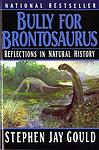
4. Bully For Brontosaurus by Stephen Jay Gould
Reflections in Natural History
In this collection of essays, the author delves into the world of natural history, paleontology, and evolutionary biology with a focus on debunking misconceptions and exploring the quirks of the natural world. Through a series of thought-provoking and often witty discussions, the book challenges the reader to reconsider their understanding of topics such as the evolution of consciousness, the debate over dinosaurs' endothermy, and the nature of scientific progress. The essays also highlight the importance of narrative in scientific discourse, illustrating how stories, such as the one about the naming of the Brontosaurus, can shape our perception of scientific truths.
The 8245th Greatest Book of All TimePurchase from Bookshop.org or Amazon -
5. The Demon Haunted World by Carl Sagan
Science as a Candle in the Dark
The book champions the importance of scientific thinking and skepticism in a world increasingly dominated by pseudosciences, superstitions, and unverified beliefs. It argues that science is not only a tool for understanding the universe but also a critical framework for safeguarding democracy and human progress. Through a series of essays and reflections, the author explores various topics including UFOs, witch hunts, and the difference between science and pseudoscience, emphasizing the need for evidence-based reasoning and the scientific method in everyday decision-making. The work serves as a plea for the adoption of scientific literacy and critical thinking as essential tools for individual empowerment and societal health.
The 9909th Greatest Book of All TimePurchase from Bookshop.org or Amazon -
6. The Origin And Development Of The Quantum Theory by Max Planck
The Nobel Prize Address Delivered Before the Royal Swedish Academy of Sciences at Stockholm, 2 June, 1920
This book presents a concise exploration of the early development of quantum theory by one of its founding fathers. It outlines the initial challenges faced by classical physics in explaining certain phenomena, particularly the distribution of energy in black-body radiation, which led to the groundbreaking introduction of the quantum hypothesis. The author discusses the quantization of energy and its implications for the field of physics, providing insights into the theoretical underpinnings and mathematical formulations that define quantum mechanics. This work is seminal in illustrating the shift from classical to modern physics, highlighting the innovative thinking and scientific rigor that propelled the advancement of quantum theory.
The 15921st Greatest Book of All TimePurchase from Amazon -
7. Personal Knowledge by Michael Polanyi
Towards a Post-Critical Philosophy

Argues that knowledge is not a purely impersonal, formal product but always involves a tacit, personal dimension: practitioners rely on skills, judgment, and intellectual passion—‘we know more than we can tell’—to perceive and articulate facts. Scientific knowing is portrayed as an exercise of personal commitment and fiduciary trust within traditions and communities, where subsidiary awareness and focal attention (indwelling) enable discovery and explanation. The work critiques strict positivist objectivism and shows how objective knowledge emerges through the interplay of subjective judgment, communal standards, and disciplined practice.
The 16676th Greatest Book of All TimePurchase from Bookshop.org -
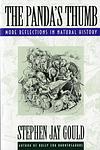
8. The Panda's Thumb by Stephen Jay Gould
More Reflections in Natural History
"The Panda's Thumb" is a collection of essays that delve into the peculiarities and wonders of natural history, emphasizing the concept of evolution through natural selection. The book explores a range of topics, from the title essay which discusses the evolutionary function of the giant panda's unique thumb as a specialized adaptation, to broader themes involving the imperfections that characterize evolutionary processes. The author uses these discussions to argue against the notion of a perfectly created world, instead presenting a perspective of life as a series of historical contingencies that produce the diverse and sometimes bizarre organisms observed in nature.
The 17173rd Greatest Book of All TimePurchase from Amazon -
9. Pseudoscience And The Paranormal by Terence Hines
A Critical Examination of the Evidence
"Pseudoscience and the Paranormal" is a critical examination of various pseudoscientific theories and paranormal claims that are often presented as scientific. The book scrutinizes a wide array of topics including astrology, psychic phenomena, UFOs, and cryptozoology, employing the principles of scientific reasoning and empirical evidence to challenge the validity of such claims. It aims to educate readers on the importance of critical thinking and the scientific method, highlighting how easily unverified information can be accepted as fact in the absence of rigorous scrutiny. The author provides a thorough analysis of why people are drawn to these beliefs and how these misconceptions can be debunked through proper scientific inquiry.
The 17173rd Greatest Book of All TimePurchase from Amazon -
10. How To Read A Paper by Adam Greenhalgh
The Basics of Evidence-based Medicine
This insightful guide serves as an essential resource for healthcare professionals and students aiming to navigate the complex world of medical literature. It provides a comprehensive framework for critically appraising research papers, offering practical tools and techniques to evaluate the validity, relevance, and applicability of findings. By demystifying the process of reading and interpreting scientific studies, the book empowers readers to make informed decisions based on evidence, ultimately enhancing their ability to apply research outcomes effectively in clinical practice.
The 17173rd Greatest Book of All Time -
11. Is Science Western In Origin? by C.K. Raju
The book argues that modern science did not arise solely in the West, tracing important contributions from non‑Western traditions—especially Indian mathematics, astronomy and computational methods—while critiquing Eurocentric historiography and colonial distortions; it examines how philosophical assumptions about proof, experiment and causality are culturally situated and calls for a pluralist, decolonized understanding of the history and practice of science that recognizes cross‑cultural exchange and social context.
The 17173rd Greatest Book of All Time




Reading Statistics
Click the button below to see how many of these books you've read!
Download
If you're interested in downloading this list as a CSV file for use in a spreadsheet application, you can easily do so by clicking the button below. Please note that to ensure a manageable file size and faster download, the CSV will include details for only the first 500 books.
DownloadTo download this list as a CSV file, please log in to your account. Once logged in, you'll be able to download the data for use in spreadsheet applications.
Login to Download