The Greatest Books of All Time on Semantics
Click to learn how this list is calculated.
This list represents a comprehensive and trusted collection of the greatest books. Developed through a specialized algorithm, it brings together 759 'best of' book lists to form a definitive guide to the world's most acclaimed books. For those interested in how these books are chosen, additional details can be found on the rankings page.
What should I read next?
Get personalized book recommendations based on your reading history and preferences. Our algorithm analyzes your favorite books and reading patterns to suggest your next great read.
Get RecommendationsGenres
Countries
Date Range
Filter books by their publication year. Enter the earliest year (Start) and latest year (End) to find books published within that period. Leave either field empty to search from the beginning of time or up to the present day.
Reading Statistics
Click the button below to see how many of these books you've read!
Download
If you're interested in downloading this list as a CSV file for use in a spreadsheet application, you can easily do so by clicking the button below. Please note that to ensure a manageable file size and faster download, the CSV will include details for only the first 500 books.
DownloadTo download this list as a CSV file, please log in to your account. Once logged in, you'll be able to download the data for use in spreadsheet applications.
Login to Download-
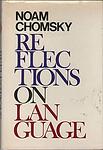
1. Reflections On Language by Noam Chomsky
This insightful work delves into the intricate nature of human language, exploring its profound implications on cognitive science and philosophy. It challenges conventional views by presenting the idea that language is an innate faculty, deeply embedded in the human mind, rather than a learned behavior. Through a series of essays, it examines the relationship between language and thought, the limitations of linguistic theory, and the broader impact of linguistic structures on human understanding. The book invites readers to reflect on the complexities of language and its pivotal role in shaping human experience and knowledge.
The 5293rd Greatest Book of All TimePurchase from Bookshop.org or Amazon -
2. From A Logical Point Of View by Willard Van Orman Quine
9 Logico-Philosophical Essays
This book is a collection of nine essays that delve into the philosophy of logic and the methodology of science. The author critically examines the relationship between language and reality, challenging the distinction between analytic and synthetic statements and advocating for a holistic approach to the empirical content of scientific theories. Through rigorous analysis and argumentation, the work explores foundational questions in epistemology and the philosophy of language, offering insights into the nature of concepts, the structure of scientific theories, and the limitations of our knowledge. The essays collectively argue for a naturalized epistemology, emphasizing the importance of empirical inquiry in understanding the world.
The 8513th Greatest Book of All TimePurchase from Amazon -
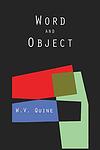
3. Word And Object by Willard Van Orman Quine
This philosophical work delves into the nature of meaning and the relationship between language and reality. It challenges the conventional distinction between analytic and synthetic statements and argues against the possibility of a neutral observation language. The author introduces the concept of the indeterminacy of translation, suggesting that there are multiple valid ways to translate words and sentences between languages without a definitive way to determine which translation is correct. Through rigorous analysis, the book explores how our understanding of the world is shaped by the structure of the language we use, ultimately questioning the foundations of semantics and the philosophy of language itself.
The 8558th Greatest Book of All TimePurchase from Bookshop.org or Amazon -
4. Language And Mind by Noam Chomsky
The book explores the intricate relationship between language and human cognition, delving into the nature of linguistic structures and their role in shaping thought processes. It introduces the concept of a universal grammar, suggesting that the ability to acquire language is innate to humans and rooted in our biological makeup. The work also examines the implications of linguistic theory for understanding the mind, arguing that language is a window into the cognitive capabilities that distinguish humans from other species. Through a series of essays, it challenges traditional views and offers a groundbreaking perspective on the interplay between language, thought, and human nature.
The 9150th Greatest Book of All TimePurchase from Bookshop.org or Amazon -
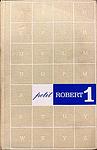
5. Petit Robert by Paul Robert
Dictionnaire alphabétique et analogique de la langue française
The book is a comprehensive French dictionary that serves as an essential reference for understanding the French language. It provides detailed definitions, etymologies, and usage examples for a vast array of words, making it an invaluable resource for students, educators, writers, and linguists. The dictionary also includes information on grammar, pronunciation, and synonyms, offering a thorough exploration of the richness and nuances of French vocabulary.
The 9540th Greatest Book of All TimePurchase from Bookshop.org or Amazon -
6. Naming And Necessity by Saul Kripke
This philosophical work challenges prevailing theories of naming and necessity within the analytic tradition. It argues against the descriptivist theory of names, which suggests that a name is merely a cluster of descriptions associated with an object. Instead, the author introduces the concept of rigid designators to explain how names refer to the same object in all possible worlds where that object exists, emphasizing that names are directly linked to their referents without the mediation of descriptive content. The book also explores the necessity of identity statements and the contingent nature of scientific identities, significantly influencing contemporary philosophy of language and metaphysics.
The 10284th Greatest Book of All TimePurchase from Amazon -
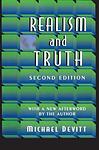
7. Realism And Truth by Michael Devitt
Philosophical Papers
In "Realism and Truth," the author presents a detailed defense of scientific realism by arguing that the world described by science is largely independent of our thoughts or linguistic practices. The book critically examines the anti-realist position, which suggests that our knowledge, scientific theories, or truths are in some way dependent on human minds or cultural constructs. Through rigorous argumentation, the author supports the idea that truths, particularly scientific truths, are objective and that the role of language is to describe and reflect these truths rather than to construct them. The work challenges various forms of skepticism and idealism, reinforcing the notion that our perceptions and scientific findings correspond to a real, external world.
The 17169th Greatest Book of All TimePurchase from Amazon -
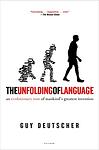
8. The Unfolding Of Language by Guy Deutscher
An Evolutionary Tour of Mankind's Greatest Invention
This book delves into the fascinating evolution of human language, exploring how it has transformed from primitive sounds to the complex systems we use today. It examines the dynamic processes that drive linguistic change, such as the natural tendency for languages to simplify and innovate over time. Through engaging examples and insightful analysis, the book reveals the underlying forces that shape language, demonstrating how these changes reflect the creativity and adaptability of human communication. It offers a captivating journey through the history of language, highlighting the intricate balance between stability and change that defines our linguistic heritage.
The 17169th Greatest Book of All TimePurchase from Bookshop.org or Amazon -
9. Fields Of Sense: A New Realist Ontology by Markus Gabriel
A New Realist Ontology

Proposes a pluralist realism in which entities exist within irreducible “fields of sense”—domains of meaning that disclose objects—rather than within a single all-encompassing world. It rejects scientistic naturalism and the notion of a totalized “world,” arguing instead for many ontological domains with their own criteria of existence. By blending phenomenological insights with analytic rigor, it shows how objects can be mind-independent yet accessible only within structures that render them intelligible, reframing debates about correlationism, ontology, and the scope of metaphysics.
The 17169th Greatest Book of All TimePurchase from Bookshop.org -
10. Nagarjuna's Madhyamaka: A Philosophical Introduction by Jan Westerhoff
A Philosophical Introduction
An accessible yet rigorous introduction to Madhyamaka as articulated by Nagarjuna, explaining the doctrine of emptiness and dependent origination, the two truths framework, and the rejection of intrinsic natures. It reconstructs core arguments against essentialism across causation, motion, composite objects, and personal identity, deploying clear analysis and formal tools. The discussion dispels charges of nihilism, situates the view within classical Indian Buddhist debates, and highlights its implications for contemporary metaphysics, epistemology, and philosophy of language.
The 17169th Greatest Book of All Time -
11. Apoha: Buddhist Nominalism And Human Cognition by Mark Siderits, Tom Tillemans, Arindam Chakrabarti
Buddhist Nominalism and Human Cognition
An interdisciplinary exploration of the Buddhist theory of apoha (exclusion), arguing that concepts and word meanings arise by differentiating what something is not rather than by invoking real universals. Bringing together historical analysis and analytic reconstruction of classical arguments, it examines how categorization, reference, and inference can function without universals, addresses objections such as circularity and regress, and connects these nominalist insights to contemporary debates in semantics, cognition, and philosophy of language.
The 17169th Greatest Book of All Time



Reading Statistics
Click the button below to see how many of these books you've read!
Download
If you're interested in downloading this list as a CSV file for use in a spreadsheet application, you can easily do so by clicking the button below. Please note that to ensure a manageable file size and faster download, the CSV will include details for only the first 500 books.
DownloadTo download this list as a CSV file, please log in to your account. Once logged in, you'll be able to download the data for use in spreadsheet applications.
Login to Download