William Empson
William Empson was an English literary critic and poet, widely influential for his work in the field of literary theory. He is best known for his book 'Seven Types of Ambiguity,' which explores the complexities of language and meaning in poetry.
Books
This list of books are ONLY the books that have been ranked on the lists that are aggregated on this site. This is not a comprehensive list of all books by this author.
-
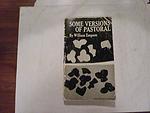
1. Some Versions Of Pastoral
A Study of the Pastoral Form in Literature
The book in question is a critical examination of the pastoral tradition in literature, which typically idealizes rural life and nature. The author argues that this tradition often serves to comment on complex social and personal issues, using the simplicity of pastoral scenes as a contrast to highlight these themes. The work explores how various writers manipulate the pastoral mode to address topics such as politics, class, and the human condition, revealing the depth and versatility of this literary form. Through close readings of texts ranging from classical antiquity to modern times, the author demonstrates the enduring relevance and adaptability of pastoral literature.
The 7216th Greatest Book of All TimePurchase from Amazon -
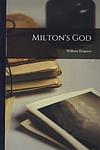
2. Milton's God
Essays on the Conception of God in Paradise Lost
The book in question is a critical examination of the portrayal of God in John Milton's epic poem "Paradise Lost." The author delves into the complexities and contradictions of the character of God as depicted by Milton, arguing that the representation is deeply flawed and morally ambiguous. Through rigorous analysis, the author challenges traditional interpretations of the poem, suggesting that Milton's God may be less benevolent and more tyrannical than commonly perceived, raising questions about the nature of authority, justice, and free will within the text. The work is a provocative and scholarly critique that invites readers to reconsider the theological and philosophical underpinnings of one of the most significant works in English literature.
The 8544th Greatest Book of All TimePurchase from Amazon -
3. Poems Of William Empson
Edited by John Haffenden
The collection is an assemblage of the lyrical and intellectual works of a 20th-century English poet renowned for his complexity and ambiguity. It showcases a range of his poetry that delves into themes of human experience, language, and perception, often characterized by intricate wordplay and a deep analysis of literary tradition. The poet's technical mastery and his ability to weave dense metaphorical structures have cemented his reputation as a significant figure in modernist poetry, and this compilation serves as a testament to his poetic achievements and his influence on the landscape of literary criticism.
The 12657th Greatest Book of All TimePurchase from Amazon -
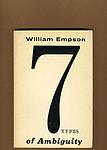
4. Seven Types Of Ambiguity
"Seven Types of Ambiguity" is a seminal work of literary criticism that explores the complex and nuanced ways in which ambiguity functions within poetry. The author meticulously analyzes various poems to illustrate how ambiguity can enrich a text by adding multiple layers of meaning, thereby enhancing the reader's interpretive experience. Through seven distinct types of ambiguity, ranging from simple misinterpretation to deeper, more intentional ambiguities embedded in the structure of language and syntax, the book argues that the recognition and appreciation of ambiguity is crucial to understanding the depth and complexity of poetic expression.
The 15918th Greatest Book of All TimePurchase from Amazon -
5. Essays On Renaissance Literature, Volume One

A collection of incisive critical essays offering close readings of major English Renaissance poetry and drama, showing how ambiguity, rhetorical maneuvering, irony and formal detail produce complex meaning; the writer teases out linguistic subtleties, paradoxes, tonal shifts and metrical effects to revise conventional interpretations, connecting careful textual analysis to questions of genre, authority and historical context and arguing that attention to diction and rhetorical structure reveals the aesthetic and ideological tensions at the heart of Renaissance writing.
Purchase from Bookshop.org -
6. Argufying
A compact collection of incisive essays that treats close reading as a kind of argument, showing how poets and critics use ambiguity, paradox, irony and rhetorical manoeuvre to make persuasive claims about meaning and value; it traces how equivocation, puns, misreading and polemic function as deliberate devices and how attention to those argumentative structures changes our response to literature. The pieces range from technical analyses of particular lines and passages to broader reflections on critical method, defending a practice that combines meticulous textual detail with a skeptical, often combative, wit. Throughout, the work insists that interpretation is not a neutral discovery but a contest of reasons and rhetorics, and it models how critical sensitivity to language can expose hidden assumptions and intellectual sleights of hand.
-
7. Essays On Renaissance Literature, Volume Two
A collection of close, often provocative critical essays that probes the language, imagery and argumentation of Renaissance poetry and drama, showing how ambiguity, rhetorical subtlety and surprising syntactic choices shape meaning and emotional effect. The pieces combine rigorous textual analysis with attention to historical and intellectual contexts, challenging received readings and revealing layers of irony, moral complexity and thematic tension in canonical works. Throughout, the writer's precise attention to verbal detail and insistence on multiple, sometimes conflicting interpretations reframe familiar passages and argue for a more nuanced appreciation of Renaissance literary craftsmanship.
Purchase from Bookshop.org