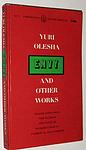
Yury Olesha
Yury Olesha was a Russian and Soviet novelist and playwright, best known for his novel 'Envy' and his children's book 'Three Fat Men'. He was a prominent figure in Soviet literature during the 1920s and 1930s.
Books
This list of books are ONLY the books that have been ranked on the lists that are aggregated on this site. This is not a comprehensive list of all books by this author.
-
1. Envy
The novel is a satirical exploration of the conflict between the old, pre-revolutionary generation and the new Soviet order. It centers on Nikolai Kavalerov, a man who finds himself homeless and disillusioned with the socialist society around him. He is taken in by Andrei Babichev, an ardent supporter of the new regime and the creator of the perfect Soviet food, the "Olympian sausage." Kavalerov becomes envious of Babichev's success and his revolutionary brother Ivan, leading to a psychological struggle that reflects the larger societal tensions of the time. The narrative delves into themes of identity, purpose, and the nature of envy, as characters grapple with their roles in a rapidly changing world.
The 2194th Greatest Book of All TimePurchase from Bookshop.org or Amazon -
2. The Three Fat Men
In a whimsical and satirical tale set in a fantastical land, the story unfolds around a rebellion against the oppressive rule of three gluttonous rulers. The narrative follows the adventures of a young acrobat named Tibul and a compassionate doctor, who join forces with the oppressed citizens to challenge the tyrannical regime. As they navigate a world filled with peculiar characters and surreal events, the protagonists strive to restore justice and equality, ultimately highlighting themes of courage, unity, and the power of the human spirit against tyranny.
-
3. Зависть

A sharp, darkly comic novel set in the early Soviet era follows a disaffected, self-pitying intellectual consumed by jealousy of a charismatic, efficient organizer who seems to embody the new society's energy and success. Torn between nostalgia for individual creativity and resentment of mass production and pragmatic purpose, the narrator's envy propels petty intrigues and increasingly desperate acts that expose both personal weakness and wider cultural tensions. Blending satire, lyricism, and absurdist detail, the work examines how revolutionary ideals collide with human vanity and longing, leaving an ambiguous portrait of progress, betrayal, and the costs of wanting what society valorizes.