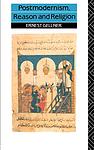
Ernest Gellner
Ernest Gellner was a British-Czech philosopher and social anthropologist, known for his work on the theory of nationalism, the philosophy of history, and the sociology of knowledge.
Books
This list of books are ONLY the books that have been ranked on the lists that are aggregated on this site. This is not a comprehensive list of all books by this author.
-
1. Nations And Nationalism
New Perspectives on the Past
This book presents a theoretical exploration of the concept of nationalism, the social conditions fostering it, and its role in the modern world. The author argues that nationalism is a product of industrial society, which necessitates a homogenous culture for communication and a centralized education system to sustain the industrial and economic structure. The work critically examines the origins and implications of nationalism, suggesting that it is not an ancient phenomenon but rather a relatively recent one that arises when a society transitions from agrarian to industrial. The author contends that nationalism serves to align the political and national unit, without necessarily corresponding to pre-existing ethnic or cultural identities, and is a political principle that holds that the political and the national unit should be congruent.
The 9519th Greatest Book of All TimePurchase from Bookshop.org or Amazon -
2. Postmodernism, Reason And Religion
The book explores the complex interplay between postmodernism, reason, and religion, critically examining how postmodernist thought challenges traditional notions of reason and objective truth. It delves into the implications of this intellectual movement for religious belief and practice, arguing that postmodernism often undermines the foundations of rational discourse while simultaneously offering a space for diverse religious expressions. Through a critical lens, the author assesses the strengths and weaknesses of postmodernism, advocating for a balanced approach that acknowledges the value of reason and the enduring significance of religion in human life.
-
3. Plough, Sword And Book
The Structure of Human History

This thought-provoking work explores the intricate interplay between agriculture, warfare, and knowledge throughout human history, examining how these three fundamental elements have shaped societies and civilizations. It delves into the evolution of human culture, highlighting the transition from agrarian societies to industrial ones, and the pivotal role of intellectual development in this transformation. The narrative weaves together historical analysis with philosophical insights, offering a comprehensive understanding of how these forces have driven social change and influenced the trajectory of human progress.
Purchase from Bookshop.org