Benjamin Graham
Benjamin Graham was a British-born American economist, professor, and investor. He is considered the father of value investing and authored several influential books on investing, including 'The Intelligent Investor' and 'Security Analysis'.
Books
This list of books are ONLY the books that have been ranked on the lists that are aggregated on this site. This is not a comprehensive list of all books by this author.
-
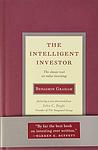
1. The Intelligent Investor
The Definitive Book on Value Investing
The book is a seminal work on the philosophy of value investing, a strategy that involves buying securities that appear underpriced by some form of fundamental analysis. The text offers insights into the psychology of investing, the importance of financial discipline, and the need to focus on long-term wealth creation. It emphasizes principles such as the margin of safety, the distinction between investing and speculating, and the critical role of investor temperament in achieving financial success. The book is widely regarded as a foundational read for individuals looking to navigate the complexities of the stock market with a more prudent and time-tested approach.
The 14896th Greatest Book of All TimePurchase from Amazon -
2. Security Analysis

This seminal work delves into the principles and methodologies of evaluating securities, offering a comprehensive guide to understanding the intrinsic value of stocks and bonds. It emphasizes the importance of thorough analysis and the distinction between investment and speculation, advocating for a disciplined approach to investing based on factual data and financial fundamentals. The book provides detailed insights into financial statements, market fluctuations, and the concept of "margin of safety," serving as a foundational text for investors seeking to make informed decisions in the complex world of finance.
The 16986th Greatest Book of All TimePurchase from Bookshop.org -
3. The Interpretation Of Financial Statements
This insightful guide serves as a foundational resource for understanding the intricacies of financial statements, offering readers a clear and concise framework to evaluate a company's financial health. It breaks down complex financial concepts into easily digestible components, focusing on balance sheets, income statements, and cash flow statements. The book emphasizes the importance of analyzing financial data to make informed investment decisions, providing practical examples and timeless wisdom that remain relevant for both novice and seasoned investors alike.
Purchase from Bookshop.org -
4. Security Analysis, Part Iii Senior Securities With Speculative Features
A detailed guide to assessing and investing in senior securities that carry speculative elements, focusing on how features like convertibility, warrants, call provisions, and preferred-stock rights affect value and risk; it explains methods for analyzing income stability, liquidation preference, conversion terms, and market behavior, and stresses conservative valuation and a margin-of-safety approach when balancing the fixed-income characteristics of such instruments against their speculative upside.
-
5. Security Analysis, Part Ii Fixed Value Investments
A rigorous, practical guide to analyzing fixed-income securities—bonds, preferred stocks and related instruments—that emphasizes safety of principal, income yield and the application of a margin-of-safety approach to credit quality, maturity, call provisions and market value. It explains how to read indentures, assess issuer strength and covenant protections, account for tax and legal considerations, and weigh trade-offs between yield, liquidity and risk, using numerical examples and case studies to distinguish conservative investments from speculative issues. The work advocates conservative valuation techniques and systematic tests to estimate downside exposure and expected returns under different scenarios.
-
6. Security Analysis, Part I Survey And Approach
Principles and Technique
A foundational guide to evaluating investments that lays out a disciplined framework for distinguishing investment from speculation, assessing intrinsic value, and insisting on a margin of safety; it emphasizes careful analysis of financial statements, earnings, bond security and equity characteristics, and the effects of market fluctuations, and it prescribes conservative, long-term valuation methods and diversification to manage risk while seeking satisfactory returns.