R. Scott Bakker
R. Scott Bakker is a Canadian author known for his speculative fiction, particularly the fantasy series 'The Prince of Nothing' and its sequels. His works often explore themes of philosophy, psychology, and the nature of consciousness.
Books
This list of books are ONLY the books that have been ranked on the lists that are aggregated on this site. This is not a comprehensive list of all books by this author.
-
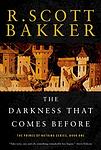
1. The Darkness That Comes Before
The Prince of Nothing
The novel is a complex epic fantasy that delves into a world on the brink of apocalypse, where political intrigue, ancient prophecies, and religious conflict intertwine. It follows an array of characters, including a manipulative sorcerer, a warrior monk with a troubled past, and a mysterious and intellectually gifted barbarian, as they navigate a landscape fraught with ancient empires and emerging factions. The narrative explores themes of free will, morality, and the human capacity for both great enlightenment and profound darkness, set against the backdrop of an impending holy war that threatens to consume the known world.
The 17175th Greatest Book of All TimePurchase from Amazon -
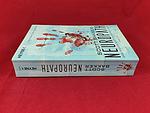
2. Neuropath
In this gripping psychological thriller, a cognitive scientist is drawn into a chilling investigation when his old friend, a brilliant but disturbed neuroscientist, begins using his expertise to manipulate and rewire people's brains, turning them into unwitting puppets. As the protagonist delves deeper into the case, he confronts unsettling questions about free will, consciousness, and the nature of humanity itself. The narrative weaves a tense and thought-provoking exploration of the boundaries of science and morality, challenging the reader to consider the implications of advanced neurological manipulation.
-
3. The Prince Of Nothing
The Darkness That Comes Before
Set in a richly detailed world reminiscent of medieval times, the story follows the enigmatic and brilliant philosopher-warrior, Anasûrimbor Kellhus, as he embarks on a journey to unite the warring factions of the Three Seas against an impending apocalyptic threat. As he navigates the treacherous political landscape, Kellhus uses his unparalleled intellect and manipulation skills to gain influence and power, drawing followers and enemies alike. The narrative explores themes of faith, power, and the nature of truth, weaving a complex tapestry of intrigue, prophecy, and existential questions that challenge the very fabric of reality.
Purchase from Bookshop.org -
4. Albert Camus

Albert Camus ( ka-MOO; French: [albɛʁ kamy] ; 7 November 1913 – 4 January 1960) was a French philosopher, novelist, author, dramatist, journalist, world federalist, and political activist. He was the recipient of the 1957 Nobel Prize in Literature at the age of 44, the second-youngest recipient in history. His works include The Stranger, The Plague, The Myth of Sisyphus, The Fall and The Rebel. Camus was born in French Algeria to pied-noir parents. He spent his childhood in a poor neighbourhood and later studied philosophy at the University of Algiers. He was in Paris when the Germans invaded France during World War II in 1940. Camus tried to flee but finally joined the French Resistance where he served as editor-in-chief at Combat, an outlawed newspaper. After the war, he was a celebrity figure and gave many lectures around the world. He married twice but had many extramarital affairs. Camus was politically active; he was part of the left that opposed Joseph Stalin and the Soviet Union because of their totalitarianism. Camus was a moralist and leaned towards anarcho-syndicalism. He was part of many organisations seeking European integration. During the Algerian War (1954–1962), he kept a neutral stance, advocating a multicultural and pluralistic Algeria, a position that was rejected by most parties. Philosophically, Camus's views contributed to the rise of the philosophy known as absurdism. Some consider Camus's work to show him to be an existentialist, even though he himself firmly rejected the term throughout his lifetime.