Paul Strathern
Paul Strathern is a British writer and academic known for his works on philosophy, science, history, and literature. He has authored several books, including the popular 'Philosophers in 90 Minutes' series and various historical biographies.
Books
This list of books are ONLY the books that have been ranked on the lists that are aggregated on this site. This is not a comprehensive list of all books by this author.
-
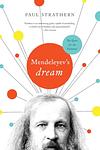
1. Mendeleyev's Dream
The Quest for the Elements
This book traces the history of chemistry from the ancient philosophers' wild speculations about the composition of the universe to the creation of the periodic table by Dmitri Mendeleyev. Through a blend of storytelling and science, it explores the development of atomic theory and chemical elements, leading up to Mendeleyev's groundbreaking dream in which he envisioned the periodic table in its modern form. The narrative delves into the lives and discoveries of key figures in the field of chemistry, illustrating how their work contributed to our understanding of the elements that make up the world around us.
The 6661st Greatest Book of All TimePurchase from Bookshop.org or Amazon -
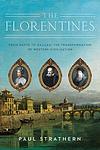
2. The Florentines
From Dante to Galileo: The Transformation of Western Civilization
The book delves into the rich tapestry of Renaissance Florence, exploring the lives and contributions of its most influential figures who shaped the era's cultural and intellectual landscape. It examines the interplay of art, politics, and philosophy, highlighting the achievements of artists, thinkers, and leaders who propelled Florence to the forefront of European civilization. Through vivid storytelling, the narrative captures the essence of a city that became a crucible of innovation and creativity, leaving an indelible mark on history.
-
3. Schopenhauer In 90 Minutes
Philosophy in 90 Minutes Series
This concise exploration delves into the life and philosophy of Arthur Schopenhauer, a pivotal figure in 19th-century thought. Known for his pessimistic worldview, Schopenhauer's ideas revolved around the concept of the "will" as the driving force of human existence, often leading to suffering and dissatisfaction. The book provides an accessible overview of his major works, including "The World as Will and Representation," and examines his influence on later thinkers such as Nietzsche and Freud. Through a blend of biographical insights and philosophical analysis, readers gain a clear understanding of Schopenhauer's enduring impact on Western philosophy.
-
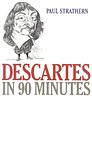
4. Descartes In 90 Minutes
A Concise Introduction to the Life and Philosophy of René Descartes
This concise exploration delves into the life and philosophical contributions of René Descartes, the father of modern philosophy. It offers a succinct overview of his groundbreaking ideas, including his famous dictum "Cogito, ergo sum" ("I think, therefore I am"), and his efforts to reconcile science and religion. The narrative captures Descartes' quest for certainty in knowledge, his development of analytical geometry, and his influence on the Enlightenment. Through a blend of historical context and philosophical analysis, readers gain a clear understanding of Descartes' enduring impact on Western thought.
-
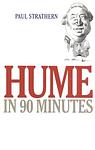
5. Hume In 90 Minutes
Philosophy in an Hour
This concise exploration delves into the life and philosophy of David Hume, offering a clear and engaging overview of his contributions to the Enlightenment. The book distills Hume's complex ideas on empiricism, skepticism, and human understanding into an accessible format, highlighting his influence on modern thought and his challenges to traditional notions of causality and religion. Through a blend of biographical context and philosophical analysis, readers gain insight into Hume's enduring impact on the fields of philosophy, economics, and history.
-
6. Wittgenstein In 90 Minutes
Philosophy in an Hour
This concise exploration delves into the life and philosophical contributions of Ludwig Wittgenstein, one of the most influential philosophers of the 20th century. The book distills Wittgenstein's complex ideas into an accessible format, focusing on his revolutionary thoughts on language, meaning, and the limits of human understanding. It highlights his major works, including the "Tractatus Logico-Philosophicus" and "Philosophical Investigations," while providing context about his tumultuous personal life and the intellectual environment of his time. This brief yet insightful overview serves as an engaging introduction to Wittgenstein's profound impact on modern philosophy.
-
7. Audit Cultures

This insightful work delves into the pervasive influence of auditing practices across various sectors, examining how these systems shape organizational behavior and cultural norms. It explores the tension between accountability and autonomy, highlighting the impact of audit cultures on professional identities and institutional practices. Through a series of case studies, the book reveals the often unintended consequences of audit regimes, questioning their efficacy and the broader implications for society. It offers a critical perspective on the balance between transparency and trust in contemporary governance.
-
8. The Other Renaissance
From Copernicus to Shakespeare: How the Renaissance Transformed the World
This insightful exploration delves into the vibrant cultural and intellectual revival that took place beyond Italy during the Renaissance period, focusing on the flourishing of arts, science, and philosophy in regions such as the Netherlands, Germany, and France. It highlights the contributions of influential figures like Erasmus, Dürer, and Montaigne, illustrating how their groundbreaking ideas and creations shaped the course of European history. The narrative weaves together the interconnectedness of these regions, showcasing the dynamic exchange of ideas that transcended borders and fueled a broader European awakening.
Purchase from Bookshop.org -
9. آشنایی با فوکو
در 90 دقیقه
This insightful book offers a concise exploration of the life and ideas of Michel Foucault, a prominent 20th-century French philosopher known for his critical studies of social institutions and power structures. It delves into Foucault's theories on the relationship between knowledge and power, his analysis of societal norms, and his influential concepts such as "biopower" and "governmentality." The book provides readers with an accessible overview of Foucault's complex thoughts, illustrating how his work continues to shape contemporary discussions in philosophy, sociology, and cultural studies.
-
10. Nietzsche In 90 Minutes
Philosophy in an Hour
This concise exploration delves into the life and philosophy of Friedrich Nietzsche, offering a clear and accessible overview of his complex ideas and their impact on modern thought. The narrative captures Nietzsche's journey from a brilliant young philologist to a revolutionary thinker who challenged conventional morality and religion, advocating for the "will to power" and the concept of the "Übermensch." Through engaging anecdotes and insightful analysis, the book distills Nietzsche's profound influence on existentialism, postmodernism, and contemporary culture, making his often misunderstood philosophy approachable for readers seeking a foundational understanding.
Purchase from Bookshop.org -
11. The Borgias
Power and Depravity in Renaissance Italy
Set against the backdrop of Renaissance Italy, this historical narrative delves into the infamous Borgia family, exploring their rise to power and the intricate web of politics, ambition, and betrayal that defined their legacy. The story vividly portrays the lives of key figures such as Rodrigo Borgia, who became Pope Alexander VI, and his children, Cesare and Lucrezia, whose actions and relationships were marked by scandal and intrigue. Through a blend of historical detail and dramatic storytelling, the book paints a complex picture of a family whose influence and notoriety left an indelible mark on history.
Purchase from Bookshop.org -
12. The Medici
Power, Money, and Ambition in the Italian Renaissance
This captivating historical narrative delves into the rise and fall of one of the most influential families in European history, tracing their journey from modest beginnings to becoming the de facto rulers of Florence. The story unfolds against the backdrop of the Renaissance, a period of unparalleled cultural and intellectual flourishing, highlighting the Medici's pivotal role in patronizing artists, architects, and thinkers who would shape the course of Western civilization. Through political maneuvering, strategic marriages, and sheer ambition, the Medici navigated the treacherous waters of power, leaving an indelible mark on art, politics, and society that resonates to this day.
Purchase from Bookshop.org -
13. Kant In 90 Minutes
A brisk, accessible introduction that outlines Immanuel Kant’s life and intellectual context and then explains his central claims: the “Copernican” insight that the mind helps shape experience, the distinction between phenomena and noumena, the role of synthetic a priori judgments and the categories of understanding, and the limits of speculative reason as argued in his Critique of Pure Reason. It also summarizes his moral philosophy emphasizing autonomy and the categorical imperative, touches on his ideas about aesthetics and teleology, and assesses his enduring influence on modern philosophy.
Purchase from Bookshop.org -
14. Hegel In 90 Minutes
A brisk, accessible primer that sketches the life and central ideas of Georg Wilhelm Friedrich Hegel, explaining his dialectical method, absolute idealism, and the view that history unfolds as reason realizing itself. It summarizes key works and concepts—such as the Phenomenology, the role of contradiction and negation, and Hegel’s theories of freedom and the state—while noting his influence and the controversies surrounding his system. The book emphasizes clarity and context, aiming to make Hegel’s dense, systematic thought intelligible to general readers in a short, readable format.
Purchase from Bookshop.org -
15. Turing & Der Computer
A concise, accessible account of a pioneering mathematician and logician that follows his intellectual development from Cambridge to his 1936 formulation of the abstract ‘Turing machine’ and its decisive role in defining computability, describes his wartime work at Bletchley Park breaking German ciphers, and surveys his postwar efforts to build electronic computers and to explore machine intelligence (including the Imitation Game), while also examining the social, legal, and personal forces that curtailed his career and shaped his legacy.