Vladimir Il’ich Lenin
Vladimir Il'ich Lenin was a Russian revolutionary, politician, and political theorist. He served as head of government of Soviet Russia from 1917 to 1924 and of the Soviet Union from 1922 to 1924. Under his administration, Russia and then the wider Soviet Union became a one-party socialist state governed by the Soviet Communist Party.
Books
This list of books are ONLY the books that have been ranked on the lists that are aggregated on this site. This is not a comprehensive list of all books by this author.
-
1. What Is To Be Done?
Burning Questions of Our Movement

The book is a seminal work in which the author outlines his vision for a revolutionary socialist movement, emphasizing the need for a highly disciplined and centralized party to lead the proletariat in overthrowing the bourgeoisie. He critiques the existing socialist movements of his time for their lack of organization and theoretical clarity, advocating for a vanguard party composed of professional revolutionaries who can guide the working class toward achieving a socialist state. The work underscores the importance of political consciousness and strategic planning in the struggle for social and economic transformation.
The 1227th Greatest Book of All TimePurchase from Bookshop.org -
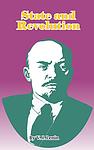
2. State And Revolution
The Marxist Theory of the State and the Tasks of the Proletariat in the Revolution
This seminal political theory text delves into the role of the state in society and the necessity of proletarian revolution to dismantle the bourgeois state apparatus. It argues that the working class must seize state power, dismantle the existing state machinery, and establish a dictatorship of the proletariat as a transitional phase towards the creation of a classless, stateless society. The work critically analyzes the ideas of Marx and Engels on the state, while also addressing the practical aspects of revolution, including the suppression of the bourgeoisie by the proletariat. It serves as a theoretical foundation for understanding the dynamics of class struggle and the path towards socialism.
The 8781st Greatest Book of All TimePurchase from Bookshop.org or Amazon -
3. Imperialism
Imperialism, the Highest Stage of Capitalism (1917), by Vladimir Lenin, describes the function of financial capital in generating profits from imperialist colonialism as the final stage of capitalist development to ensure greater profits. The essay is a synthesis of Lenin's modifications and developments of economic theories that Karl Marx formulated in Das Kapital (1867).
The 17061st Greatest Book of All Time -
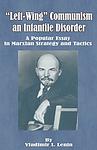
4. Left Wing Communism, An Infantile Disorder
A Popular Essay in Marxian Strategy and Tactics
This work serves as a critical examination of the challenges faced by the communist movement in the early 20th century, particularly addressing the pitfalls of left-wing extremism. It argues for the necessity of strategic flexibility and pragmatic alliances with non-communist entities to achieve revolutionary goals. The text emphasizes the importance of understanding the unique conditions of each country and adapting tactics accordingly, warning against the dangers of dogmatism and sectarianism that can alienate potential allies and hinder the broader socialist cause.
-
5. Cuadernos Filosóficos
This collection of philosophical notebooks delves into the intricate interplay between dialectical materialism and the evolution of human thought. Through meticulous analysis and critical reflections, the work explores the philosophical underpinnings of Marxist theory, emphasizing the importance of dialectics in understanding historical and social processes. The author engages with a wide array of philosophical texts, offering insights into the development of materialist philosophy and its implications for revolutionary praxis. The notebooks serve as a testament to the author's intellectual rigor and commitment to advancing the theoretical foundations of socialism.
Purchase from Bookshop.org -
6. La Revolución Proletaria Y El Renegado Kautsky
This incisive critique dissects the ideological betrayal of a prominent socialist figure who opposed the Bolshevik approach to revolution. It delves into the theoretical and practical differences between revolutionary Marxism and reformist socialism, highlighting the necessity of a proletarian dictatorship to achieve true socialist transformation. The work underscores the importance of unwavering commitment to revolutionary principles, condemning any deviation that compromises the ultimate goal of establishing a classless society.
Purchase from Bookshop.org -
7. Las Tesis De Abril
In this pivotal work, the author outlines a series of directives aimed at transforming the political landscape during a time of revolutionary fervor. The text emphasizes the need for a radical shift in power dynamics, advocating for the transfer of authority from provisional government structures to the Soviets, which are seen as the true representatives of the working class and peasantry. The author calls for an end to the ongoing war, the nationalization of land, and the establishment of a socialist state, laying the groundwork for a new era of governance rooted in Marxist principles.
-
8. Materialismo Y Empiriocriticismo
Critical Comments on a Reactionary Philosophy
This work serves as a rigorous critique of the philosophical underpinnings of empirio-criticism, a school of thought that emerged in the early 20th century. It systematically dismantles the arguments of prominent philosophers of the time who sought to reconcile empiricism with idealism, arguing instead for a materialist interpretation of reality. Through a detailed analysis, it defends dialectical materialism as the only scientific approach to understanding the world, emphasizing the importance of objective reality independent of human perception. The text is a passionate defense of materialism, aiming to reaffirm its relevance and necessity in the face of rising idealist philosophies.
Purchase from Bookshop.org -
9. Anarchism And Socialism
A polemical critique contrasting anarchist ideas with the socialist movement, arguing that anarchism misunderstands the need for organized political struggle, disciplined party leadership, and temporary centralized state power to dismantle capitalist institutions; it defends the necessity of a revolutionary proletarian organization and tactical use of state structures to secure and consolidate working-class gains, while criticizing anarchist emphasis on spontaneous action and immediate abolition of the state as impractical for achieving lasting social transformation.
-
10. The Three Sources And Three Component Parts Of Marxism. Karl Marx. Frederick Engels
An accessible account tracing the intellectual roots and elements of Marxism, arguing it arose from the fusion of German philosophical thought (notably Hegelian dialectics), English political economy, and French socialist movements. It identifies three core components—dialectical materialist philosophy, scientific analysis of capitalist political economy, and the revolutionary proletarian movement and political practice—and emphasizes their unity as a living, developing theory and guide to social transformation.
Purchase from Bookshop.org -
11. The Right Of Nations To Self Determination
He argues that in the age of imperialism the right of nations to self-determination—including the right to secede—must be upheld as a democratic principle by socialists, both to combat national oppression and to win the trust of oppressed peoples; he criticizes bourgeois nationalism and opportunist socialism that deny this right, insists that recognizing self-determination is compatible with proletarian internationalism, and contends that voluntary federations and free choice, not forced domination, best advance working-class unity and the struggle against imperialism.
Purchase from Bookshop.org -
12. The April Theses
A concise program issued in April 1917 calling for an immediate break with the provisional government and bourgeois parties, an end to Russia’s participation in the imperialist war, transfer of all power to workers’ and soldiers’ councils (soviets), nationalization of land and key industries, and an uncompromising push by the Bolsheviks to prepare for and lead a proletarian revolution to establish socialist rule.
-
13. Esquerdismo
An Infantile Disorder
A forceful critique of ultra-left sectarianism arguing that refusing to use parliaments, trade unions, and legal forms of struggle isolates revolutionaries from the working class and weakens the movement; drawing on recent revolutionary experience, it defends disciplined party organization, tactical flexibility, and mass work (including participation in imperfect institutions) as necessary to build broad support, while warning that dogmatic purity, spontaneity, and adventurism will prevent the successful preparation for and seizure of state power.