Robert D. Putnam
Robert David Putnam is a political scientist and professor of public policy at the Harvard University John F. Kennedy School of Government. He is known for his works on social capital, including the influential book 'Bowling Alone: The Collapse and Revival of American Community'.
Books
This list of books are ONLY the books that have been ranked on the lists that are aggregated on this site. This is not a comprehensive list of all books by this author.
-
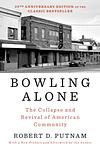
1. Bowling Alone
The Collapse and Revival of American Community
This book delves into the decline of social capital in the United States over the latter half of the 20th century, illustrating how Americans have become increasingly disconnected from their families, friends, neighbors, and democratic structures. It explores the consequences of this disengagement, arguing that the fabric of American social life has frayed significantly, with civic, social, and political participation diminishing. Through a comprehensive analysis of societal trends, the author demonstrates how this shift away from communal activities towards individual pursuits has profound implications for the health, happiness, and stability of society.
The 6965th Greatest Book of All TimePurchase from Bookshop.org or Amazon -
2. Our Kids
The American Dream in Crisis
The book explores the growing opportunity gap between rich and poor children in America, examining how economic inequality affects access to education, family stability, and community support. Through a combination of personal stories and statistical analysis, it highlights the disparities in resources and opportunities available to children from different socioeconomic backgrounds. The author argues that this widening gap undermines the American Dream and calls for a collective effort to invest in the future of all children, regardless of their economic status.
The 8846th Greatest Book of All TimePurchase from Bookshop.org or Amazon -
3. American Grace
How Religion Divides and Unites Us

This insightful exploration delves into the complex landscape of religion in the United States, examining how faith influences American society and politics. Through comprehensive research and analysis, it reveals the paradox of a nation deeply divided by religious beliefs yet remarkably tolerant of diverse faiths. The narrative highlights the evolving role of religion in public life, the rise of interfaith friendships, and the surprising resilience of religious pluralism, offering a nuanced understanding of how Americans navigate their spiritual lives amidst cultural and ideological shifts.
-
4. The Sinister
-
5. The Upswing
How America Came Together a Century Ago and How We Can Do It Again
A sweeping historical analysis that argues America has swung between periods of intense individualism and deep social solidarity, tracing a mid-20th-century rise in civic trust, public investment, and economic equality followed by a late-20th-century decline marked by growing inequality, polarization, and weakened institutions; drawing on long-run data across social, economic, and political indicators, it explains how cultural and structural forces produced those shifts and offers policy and civic prescriptions—strengthening unions, public education, community organizations, progressive taxation, and democratic reforms—to rebuild social cohesion and revive a more functional democracy.