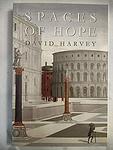
David Harvey
David Harvey is a distinguished British geographer and Marxist theorist known for his work in human geography and critique of global capitalism. He has authored numerous influential books and articles, and is a prominent academic figure in the field of social theory.
Books
This list of books are ONLY the books that have been ranked on the lists that are aggregated on this site. This is not a comprehensive list of all books by this author.
-
1. A Brief History Of Neoliberalism
This book provides a critical examination of neoliberalism, tracing its origins and development from the late 20th century to its pervasive influence on global economics and politics. The author argues that neoliberalism, a doctrine advocating for free markets, deregulation, and reduction in government spending, has concentrated wealth and power in the hands of a few, leading to increased social inequality and environmental degradation. Through a detailed analysis of various countries' experiences, the book highlights the consequences of neoliberal policies and calls for a reevaluation of the current economic paradigm to address its shortcomings and create a more equitable and sustainable future.
The 10989th Greatest Book of All TimePurchase from Amazon -
2. Spaces Of Hope
None
The book explores the intersections of geography, politics, and economics, proposing a vision for a more equitable and sustainable future. It critiques the prevailing neoliberal economic system and its impact on urban spaces, highlighting issues such as social inequality and environmental degradation. Through a Marxist lens, it advocates for transformative social change, emphasizing the importance of spatial justice and collective action. The work encourages readers to envision alternative possibilities for organizing society, focusing on the potential for creating spaces that foster hope and empowerment for marginalized communities.
-
3. Paris, Capital Of Modernity
An Exploration of the Social, Political, and Cultural Transformation of Paris in the 19th Century

Set against the backdrop of the transformative 19th century, this book delves into the profound changes that shaped Paris into a beacon of modernity. It explores the city's evolution through the lens of urban planning, social dynamics, and cultural shifts, highlighting the interplay between political power and the burgeoning capitalist economy. The narrative intricately weaves together the architectural innovations, the rise of consumer culture, and the tensions between tradition and progress, painting a vivid picture of how Paris became a symbol of modern urban life and a crucible for revolutionary ideas.
Purchase from Bookshop.org -
4. The Future Of Heritage As Climates Change
Loss, Adaptation and Creativity
This insightful work delves into the intricate relationship between cultural heritage and the evolving climate crisis, exploring how these two domains intersect and influence each other. It examines the challenges faced by heritage conservation in the face of environmental changes, advocating for adaptive strategies that integrate scientific understanding with cultural sensitivity. The book emphasizes the importance of rethinking traditional preservation methods and encourages a collaborative approach that involves communities, policymakers, and scientists to ensure that heritage sites can withstand and adapt to the impacts of climate change.
Purchase from Bookshop.org -
5. Spaces Of Capital
Towards a Critical Geography
This insightful work delves into the intricate relationship between geography and capitalism, exploring how spatial dynamics influence economic processes and vice versa. Through a series of essays, the author examines the role of space in the development of capitalist economies, highlighting how urbanization, globalization, and uneven development are shaped by and shape the capitalist system. The book provides a critical analysis of how capital flows and accumulates, emphasizing the importance of spatial considerations in understanding economic transformations and social inequalities in the modern world.
Purchase from Bookshop.org -
6. The Condition Of Postmodernity
An Enquiry into the Origins of Cultural Change
This influential work explores the complex relationship between modernity and postmodernity, examining how shifts in economic, social, and cultural practices have transformed the way we experience time and space. It delves into the rise of flexible accumulation, the fragmentation of cultural forms, and the increasing significance of consumerism and media in shaping contemporary life. By analyzing the historical context and theoretical underpinnings of these changes, the book provides a critical framework for understanding the dynamics of late 20th-century capitalism and its impact on urban environments and social structures.
Purchase from Bookshop.org -
7. A Companion To Marx's Capital, Volume 1
This insightful guide serves as an accessible companion to the first volume of Marx's seminal work, "Capital," offering readers a clear and comprehensive understanding of its complex theories and concepts. It breaks down Marx's analysis of capitalism, focusing on the intricacies of commodity production, labor value, and the dynamics of capital accumulation. The book provides historical context, critical interpretations, and contemporary relevance, making it an invaluable resource for both newcomers and seasoned scholars seeking to grasp the profound implications of Marx's economic critique.
Purchase from Bookshop.org -
8. Marx, Capital And The Madness Of Economic Reason
Capital and the Madness of Economic Reason
This insightful work delves into the complexities of Marx's "Capital," unraveling the intricate web of economic theories that have shaped modern capitalism. It offers a fresh perspective on Marx's critique of political economy, emphasizing the relevance of his ideas in understanding contemporary economic phenomena. The book explores the contradictions and irrationalities inherent in capitalist systems, shedding light on the persistent issues of inequality and instability. Through a critical analysis, it challenges readers to reconsider the foundational principles of economic reasoning and the potential for transformative change in the pursuit of a more equitable society.
Purchase from Bookshop.org -
9. Seventeen Contradictions And The End Of Capitalism
And the End of Capitalism
In this thought-provoking analysis, the author delves into the inherent contradictions within the capitalist system, exploring how these contradictions not only drive economic growth but also lead to systemic instability and crises. By dissecting seventeen key contradictions, the narrative highlights the tensions between capital accumulation, social inequality, and environmental degradation. The book challenges readers to rethink the sustainability of capitalism and consider alternative economic models that could address these contradictions, ultimately questioning whether capitalism can adapt or if it is destined for an inevitable transformation.
Purchase from Bookshop.org -
10. The Song Of Middle Earth
Tolkien and the Road to Middle-earth
This insightful exploration delves into the intricate themes, rich symbolism, and profound cultural influences that shape the legendary world of Middle-earth. It offers a comprehensive analysis of the mythological and historical underpinnings that inspired the creation of this beloved fantasy realm, highlighting the deep connections between the narrative and the broader human experience. Through a detailed examination of the characters, landscapes, and languages, the book reveals the enduring legacy and universal appeal of this epic saga, inviting readers to appreciate the depth and complexity of its storytelling.
-
Purchase from Bookshop.org
-
Purchase from Bookshop.org
-
13. The Ways Of The World
A concise, historically grounded analysis that traces the development and global spread of modern capitalism through a Marxist-geographic lens, showing how processes like primitive accumulation, industrialization, colonialism, and financialization have reshaped societies, spaces, and labor relations; it emphasizes capitalism’s recurring contradictions—constant innovation alongside recurring crises, dispossession and uneven geographical development—and argues that understanding these spatial and historical dynamics is crucial to grasping contemporary inequalities and imagining emancipatory political responses.
Purchase from Bookshop.org -
14. The Enigma Of Capital
and the Crises of Capitalism
An analysis of capitalism as a dynamic, crisis-prone system driven by the imperative of accumulation, arguing that recurrent crises arise from overaccumulation and problems of realizing surplus value; it traces how mechanisms such as financialization, credit expansion, privatization, and dispossession are used to absorb surplus and defer breakdowns, producing uneven geographical development, intensified urbanization, and deepening social antagonisms, and contends that a political understanding of these processes is necessary to confront and transform the system.
Purchase from Bookshop.org