Thomas Nagel
Thomas Nagel is an American philosopher, currently University Professor of Philosophy and Law Emeritus at New York University, known for his work in philosophy of mind, political philosophy, and ethics. He is noted for his critique of reductionist accounts of the mind and his argument against materialist theories of consciousness.
Books
This list of books are ONLY the books that have been ranked on the lists that are aggregated on this site. This is not a comprehensive list of all books by this author.
-
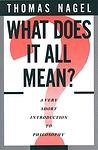
1. What Does It All Mean?
A Very Short Introduction to Philosophy
This book serves as an accessible introduction to philosophy, aimed at those with little to no background in the subject. It presents a series of fundamental philosophical questions—ranging from the existence of knowledge, the nature of the mind and consciousness, to the implications of free will and the essence of morality. Through engaging and straightforward prose, the author invites readers to ponder these deep questions, encouraging them to think critically about the world around them and their place within it. Rather than providing definitive answers, the book opens up a space for inquiry and reflection, making the case that wrestling with these questions is a crucial part of the human experience.
The 17165th Greatest Book of All TimePurchase from Amazon -
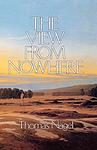
2. The View From Nowhere
An Essay on Objectivity and the Subjective Point of View
"The View from Nowhere" explores the challenge of reconciling two perspectives: the subjective and the objective. The author delves into philosophical issues such as the nature of reality, our understanding of the self, and how we relate to the world around us. He examines the tension between our personal, internal experiences and the external, impersonal viewpoint of the universe. The book critically analyzes how we can gain objective knowledge while acknowledging our own subjective consciousness, ultimately aiming to bridge the gap between these fundamentally different viewpoints.
The 17165th Greatest Book of All TimePurchase from Amazon -
3. Mind And Cosmos
Why the Materialist Neo-Darwinian Conception of Nature Is Almost Certainly False

A philosophical critique of materialist neo-Darwinism, arguing that consciousness, reason, and moral value cannot be fully explained by current physicalist accounts or by chance-and-selection alone. It proposes that subjective experience and rationality are fundamental aspects of reality that demand an expanded conception of nature, potentially involving teleological principles or new laws. Rejecting both reductive physicalism and theistic explanations, it sketches a naturalistic framework in which mind is not an accidental byproduct but a basic feature of the universe.
The 17165th Greatest Book of All TimePurchase from Bookshop.org -
4. The Possibility Of Altruism
This philosophical work explores the nature of human motivation, challenging the traditional view that self-interest is the primary driver of human actions. It argues for the existence of altruism as a fundamental aspect of human nature, suggesting that individuals are capable of acting out of genuine concern for others, independent of personal gain. The book delves into the implications of this perspective for ethical theory, proposing that moral reasoning can be grounded in the recognition of others' interests as intrinsically valuable, thereby reshaping our understanding of moral obligations and human behavior.
Purchase from Bookshop.org -
5. What Is It Like To Be A Bat?
This philosophical essay delves into the nature of consciousness and the subjective experience of living beings, using the example of a bat to illustrate the challenges of understanding another creature's perspective. It argues that even with a complete scientific understanding of a bat's physiology and behavior, humans cannot fully grasp what it is like to be a bat due to the fundamentally subjective nature of experience. The work challenges reductionist views of consciousness, emphasizing the limitations of objective analysis in capturing the essence of subjective experiences.
Purchase from Bookshop.org -
6. Mind & Cosmos
Why the Materialist Neo-Darwinian Conception of Nature is Almost Certainly False
This philosophical work challenges the prevailing scientific worldview by questioning the adequacy of materialist explanations for consciousness, cognition, and values. It argues that the reductionist approach of neo-Darwinian biology fails to account for the subjective nature of consciousness and the emergence of life, suggesting that a new framework is needed to understand the mind's place in the cosmos. The book proposes that an alternative, teleological perspective might better explain the existence and nature of consciousness, urging a reconsideration of the fundamental principles underlying our understanding of the universe.
Purchase from Bookshop.org -
7. The Last Word
On the Nature of Moral and Political Philosophy
This philosophical work delves into the nature of reason, arguing for its objectivity and universality against the backdrop of relativistic and subjectivist perspectives. It challenges the notion that reason is merely a cultural construct or a tool of persuasion, asserting instead that it is a fundamental aspect of human thought that transcends individual and cultural differences. Through a series of compelling arguments, the book defends the idea that reason is the ultimate arbiter in matters of truth and knowledge, emphasizing its indispensable role in human understanding and communication.
-
8. Mortal Questions
This philosophical exploration delves into the complexities of human existence, examining profound questions about life, death, and morality. Through a series of essays, it challenges readers to reflect on the nature of consciousness, the meaning of life, and the ethical implications of our actions. The work encourages a deeper understanding of the human condition by addressing topics such as the fear of death, the concept of free will, and the pursuit of happiness, ultimately prompting readers to question their own beliefs and assumptions about what it means to be human.