Peter Adamson
Peter Adamson is a professor of philosophy at the Ludwig Maximilian University of Munich. He is known for his work on the history of philosophy, particularly ancient and medieval philosophy, and for his podcast 'History of Philosophy without any gaps'.
Books
This list of books are ONLY the books that have been ranked on the lists that are aggregated on this site. This is not a comprehensive list of all books by this author.
-
1. Jim Grant

This biography provides an in-depth look into the life and career of Jim Grant, a prominent figure whose contributions have significantly impacted his field. The book meticulously details Grant's early life, educational background, and the pivotal moments that shaped his career trajectory. Through extensive research and interviews, the author, Peter Adamson, paints a comprehensive portrait of Grant, highlighting his professional achievements, the challenges he faced, and his lasting legacy. This narrative not only celebrates Grant's accomplishments but also provides valuable insights into the societal and historical context in which he worked, making it a compelling read for anyone interested in the life of this influential individual.
The 14212th Greatest Book of All Time -
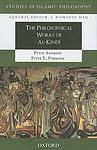
2. The Philosophical Works Of Al Kindi
On the Art of Dispelling Sorrows
This book is a comprehensive compilation and analysis of the works of Al-Kindi, often regarded as the first of the Muslim peripatetic philosophers. The text delves into Al-Kindi's extensive contributions to various fields of knowledge, including philosophy, mathematics, astronomy, and medicine, highlighting his role as a pivotal figure in the translation and transmission of ancient Greek philosophy to the Islamic world. Through translations of his works and insightful commentary, the book provides a critical exploration of Al-Kindi's synthesis of philosophical thought and his influence on subsequent Islamic and Western intellectual traditions.
The 17173rd Greatest Book of All TimePurchase from Amazon -
3. Don't Think For Yourself
In this thought-provoking exploration, readers are invited to delve into the intricate relationship between individual reasoning and collective wisdom. The narrative challenges the modern emphasis on personal autonomy by highlighting the value of historical and philosophical traditions in shaping our understanding of the world. Through a series of engaging arguments and examples, the book encourages a reevaluation of the balance between independent thought and the insights gained from communal knowledge, urging readers to consider the benefits of drawing from the rich tapestry of human experience.
Purchase from Bookshop.org -
4. Classical Philosophy
A History of Philosophy Without Any Gaps, Volume 1
A concise, accessible survey of ancient Greek and Hellenistic thought that traces the development of philosophy from the pre-Socratics through Socrates, Plato and Aristotle to the major Hellenistic schools, situating their metaphysical, epistemological and ethical doctrines in historical context; it explains core ideas such as forms, substance, causation, virtue and skepticism, examines debates about knowledge and the good life, and guides readers through primary texts and scholarly controversies with clear narrative and critical exposition.
Purchase from Bookshop.org -
5. Philosophy In The Islamic World
A Very Short Introduction
A concise survey of philosophical activity across the medieval Islamic world, tracing how scholars translated, adapted and transformed Greek, Persian and Indian learning into debates about God, metaphysics, logic, ethics and natural philosophy; it explains the rise of kalam and theological schools, the flowering of philosophical schools exemplified by figures such as al‑Farabi, Avicenna, al‑Ghazali and Averroes, and the institutional and intellectual contexts (translation movement, courts, madrasas) that shaped their inquiries. The account highlights central themes—reason versus revelation, the nature of being and the soul, causation and demonstration—and shows how Islamic thinkers both influenced and were influenced by neighboring traditions, leaving a complex legacy for later European and modern thought.
Purchase from Bookshop.org -
6. Philosophy In The Hellenistic And Roman Worlds
A History of Philosophy Without Any Gaps
A compact survey of philosophical activity from the collapse of the classical polis through late antiquity, tracing how Hellenistic schools (Stoics, Epicureans, Skeptics, Cynics) and Roman thinkers adapted Greek thought to new social and political realities. It explains central doctrines in ethics, epistemology, logic and natural philosophy, highlights principal figures and texts, and shows how philosophical practice became oriented toward individual guidance and moral therapy of the soul. The narrative follows developments through Middle Platonism and Neoplatonism, paying attention to interactions with science, religion and emerging Christian thought, and emphasizes both continuity and innovation in this formative period.
Purchase from Bookshop.org