Jeff Hawkins
Jeff Hawkins is an American inventor, scientist, and author known for his work in neuroscience and artificial intelligence. He is the co-founder of Numenta, a company focused on machine intelligence, and is also known for his role in developing the PalmPilot and Handspring.
Books
This list of books are ONLY the books that have been ranked on the lists that are aggregated on this site. This is not a comprehensive list of all books by this author.
-
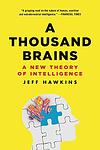
1. A Thousand Brains
A New Theory of Intelligence
This book introduces a groundbreaking theory of intelligence, proposing a novel understanding of how the brain works. It challenges traditional models by suggesting that the brain operates not through a single engine of reasoning but through a network of many tiny brains working in parallel. Each of these "brains" is a specialized unit responsible for understanding the world through a specific lens. The author, a renowned figure in the field of neuroscience and artificial intelligence, combines the latest scientific research with accessible explanations to explore how this theory could not only revolutionize our understanding of human intelligence but also pave the way for more advanced and empathetic artificial intelligence systems. Through this lens, the book delves into the implications for how we learn, how we make decisions, and how we perceive the world around us.
The 15616th Greatest Book of All TimePurchase from Amazon -
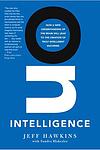
2. On Intelligence
How a New Understanding of the Brain Will Lead to the Creation of Truly Intelligent Machines
The book explores the nature of human intelligence by proposing a theory that the brain's neocortex is responsible for prediction-based processing. It suggests that intelligence arises from the brain's ability to create and manipulate models of the world, using past experiences to predict future events. The author argues that understanding this mechanism could lead to advancements in artificial intelligence by mimicking the brain's hierarchical structure and pattern recognition capabilities. The book combines insights from neuroscience, psychology, and computer science to offer a comprehensive view of how intelligence functions and how it might be replicated in machines.