Jay L. Garfield
Jay L. Garfield is a distinguished professor of philosophy known for his work in Buddhist philosophy, cognitive science, and the philosophy of mind. He has authored numerous books and articles, contributing significantly to cross-cultural philosophy and the understanding of non-Western philosophical traditions.
Books
This list of books are ONLY the books that have been ranked on the lists that are aggregated on this site. This is not a comprehensive list of all books by this author.
-
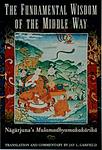
1. The Fundamental Wisdom Of The Middle Way
Nagarjuna's Mulamadhyamakakarika
"The Fundamental Wisdom of the Middle Way" is a philosophical text that explores the Buddhist concept of emptiness and the nature of reality. The work is a verse-by-verse commentary on the challenges and questions pertaining to conventional existence and ultimate truth, aiming to resolve the dichotomies and contradictions inherent in ordinary experience. Through rigorous argumentation and logical analysis, the text deconstructs the assumptions of inherent existence in phenomena, proposing instead that all things exist interdependently. This exposition not only deepens the understanding of Buddhist philosophy but also offers insights into the nature of suffering and liberation.
The 15921st Greatest Book of All TimePurchase from Bookshop.org or Amazon -
2. Losing Ourselves
Learning to Live Without a Self
In this thought-provoking exploration, the author delves into the philosophical concept of selfhood, challenging the traditional Western notion of a singular, autonomous self. Drawing from a rich tapestry of Eastern philosophies, particularly Buddhist teachings, the narrative invites readers to reconsider the nature of identity and the illusion of a permanent self. Through a blend of scholarly insight and accessible prose, the book encourages a deeper understanding of how our perceptions of self can shape our experiences, relationships, and overall sense of well-being, ultimately advocating for a more interconnected and compassionate worldview.
Purchase from Bookshop.org -
3. Empty Words
Buddhist Philosophy and Cross-Cultural Interpretation

A collection of essays that develops a rigorous, accessible account of Buddhist philosophy—especially the Madhyamaka doctrine of emptiness and the two truths—while engaging with contemporary analytic debates about meaning, reference, and ontology. It clarifies how notions of selflessness, conventional reality, and dependent origination avoid both nihilism and metaphysical realism, and explores implications for ethics and the philosophy of mind. Along the way, it offers a methodological reflection on translation and cross-cultural interpretation, arguing for careful, philosophically informed engagement between Asian and Western traditions.
Purchase from Bookshop.org -
4. Engaging Buddhism
Why It Matters to Philosophy
A cross-cultural philosophical inquiry arguing that Buddhist thought should be taken as a live interlocutor in contemporary debates, it explores how ideas of emptiness, dependent origination, and the absence of a self bear on metaphysics, epistemology, philosophy of mind, language, and ethics. By reading figures like Nāgārjuna, Dignāga, Dharmakīrti, and Śāntideva alongside analytic philosophy, it challenges essentialist assumptions, clarifies the two truths, and advances a pragmatic conventionalism that grounds compassion and responsibility without positing intrinsic natures.