F. W. J. Schelling
Friedrich Wilhelm Joseph Schelling was a German philosopher, one of the major figures of German Idealism. His work covered a wide range of topics including nature, art, and the philosophy of identity.
Books
This list of books are ONLY the books that have been ranked on the lists that are aggregated on this site. This is not a comprehensive list of all books by this author.
-
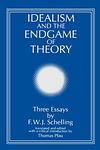
1. Idealism And The Endgame Of Theory
Three Essays by F. W. J. Schelling
"Idealism and the Endgame of Theory" explores the philosophical contributions of F. W. J. Schelling, focusing on his role in the development of idealism. The book delves into Schelling's critique of his contemporaries and predecessors, including Fichte and Hegel, and examines his unique approach to nature, freedom, and identity. It highlights Schelling's influence on later philosophical thought and his relevance to contemporary debates in philosophy and theory, presenting his work as a pivotal moment in the evolution of idealist thought. The text serves as both an introduction to Schelling's philosophy and a critical re-evaluation of his place within the broader spectrum of philosophical discourse.
The 15922nd Greatest Book of All TimePurchase from Bookshop.org or Amazon -
2. The Ages Of The World

A fragmentary speculative cosmogony that portrays creation as an ongoing drama of divine becoming, tracing the emergence of nature, time, and consciousness from a pre-temporal ground through the tension between dark, contracting forces and luminous, expansive powers. It examines how necessity and freedom interact across the ages of past, present, and future, linking cosmic evolution to human history, moral agency, and the problem of evil. Blending mythic narrative with metaphysical analysis, it seeks to show how personality and revelation arise within the dynamic life of the world.
The 15921st Greatest Book of All TimePurchase from Bookshop.org -
3. On The History Of Modern Philosophy
This work delves into the evolution of philosophical thought from the Renaissance to the 19th century, exploring the dynamic interplay between reason and nature. It examines the progression of ideas that shaped modern philosophy, emphasizing the transition from metaphysical speculation to empirical inquiry. The text highlights the contributions of key thinkers and the development of philosophical systems that sought to reconcile the subjective and objective realms, ultimately aiming to illuminate the underlying unity of knowledge and existence.
Purchase from Bookshop.org -
4. Einleitung In Die Philosophie
This work serves as an introductory exploration into the realm of philosophy, delving into the foundational concepts and principles that underpin philosophical inquiry. It offers a comprehensive overview of the evolution of philosophical thought, examining the interplay between nature, human consciousness, and the divine. Through a dialectical approach, the text seeks to reconcile the apparent contradictions between freedom and necessity, subjectivity and objectivity, ultimately aiming to illuminate the path towards a deeper understanding of existence and the universe. The narrative is both a reflection on the history of philosophy and a guide for aspiring thinkers to engage with the profound questions of life.
Purchase from Bookshop.org -
5. Filosofiska Undersökningar Om Den Mänskliga Frihetens Väsen
This philosophical treatise delves into the intricate nature of human freedom, exploring the tension between necessity and liberty. It examines the concept of freedom not merely as an abstract ideal but as a fundamental aspect of human existence that is intricately linked to the individual's moral and ethical responsibilities. Through a dialectical approach, the work challenges the reader to consider the dynamic interplay between freedom and determinism, ultimately suggesting that true freedom is realized through the conscious acknowledgment and acceptance of one's inherent limitations and potentialities.