Jürgen Habermas
Jürgen Habermas is a prominent German philosopher and sociologist known for his work in critical theory and pragmatism. He is particularly noted for his theory on communicative rationality and the public sphere.
Books
This list of books are ONLY the books that have been ranked on the lists that are aggregated on this site. This is not a comprehensive list of all books by this author.
-
1. The Theory Of Communicative Action
Reason and the Rationalization of Society
The book is a seminal work in social theory that explores the concept of communicative action, where individuals interact based on mutual understanding and pursue rational arguments, consensus, and cooperation rather than merely acting for individual success. The author critiques the instrumental and strategic action in modern societies and argues that communicative action is essential for maintaining the rationality and democratic nature of human interactions. The work delves into the structures of how language and social interaction form the basis of society and how distortions in communication can lead to social issues, emphasizing the importance of transparent and undistorted communication in achieving genuine understanding and societal cohesion.
The 2798th Greatest Book of All TimePurchase from Bookshop.org or Amazon -
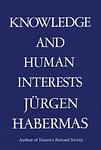
2. Knowledge And Human Interests
The book explores the relationship between knowledge and human interests, proposing that different forms of knowledge are driven by distinct human interests. It categorizes knowledge into three types: empirical-analytic, historical-hermeneutic, and critical, each associated with specific cognitive interests—technical control, mutual understanding, and emancipation, respectively. The author argues that understanding these underlying interests is crucial for comprehending the development and application of knowledge, ultimately advocating for a critical approach that seeks human emancipation by challenging power structures and ideologies.
The 9148th Greatest Book of All TimePurchase from Bookshop.org or Amazon -
3. The Philosophical Discourse Of Modernity
Twelve Lectures

This influential work critically examines the evolution of modern philosophical thought, focusing on the transition from Enlightenment ideals to contemporary postmodern perspectives. It delves into the works of key figures such as Hegel, Nietzsche, and Foucault, exploring their contributions to the discourse on reason, subjectivity, and societal progress. The text argues for a renewed commitment to rational discourse and communicative action as a means to address the challenges posed by modernity, advocating for a balance between tradition and innovation in philosophical inquiry.
Purchase from Bookshop.org -
4. The Structural Transformation Of The Public Sphere
An Inquiry into a Category of Bourgeois Society
This seminal work explores the evolution of the public sphere from the 18th century to the modern era, highlighting its role as a space for critical public debate and discourse. It examines how the rise of bourgeois society facilitated the emergence of a public sphere where individuals could engage in rational-critical discussions about societal issues, free from the influence of state and economic powers. However, the book also critiques the decline of this idealized public sphere in contemporary times, as mass media and consumer culture have led to its transformation into a domain dominated by private interests and passive consumption, undermining its democratic potential.
Purchase from Bookshop.org -
5. Communication & The Evolution Of Society
A New Theory of Social Evolution
This influential work delves into the intricate relationship between communication and societal evolution, exploring how language and discourse shape social structures and norms. It examines the role of communicative action in fostering mutual understanding and consensus, emphasizing the importance of rational dialogue in democratic societies. The book also critiques the limitations of traditional social theories, proposing a framework that integrates communication as a central component in the analysis of social change and development. Through a blend of philosophical inquiry and sociological analysis, it offers a comprehensive perspective on how communication influences the trajectory of human societies.
Purchase from Bookshop.org -
6. Philosophy In A Time Of Terror
Dialogues with Jürgen Habermas and Jacques Derrida
In this thought-provoking work, two of the most influential philosophers of the 20th century engage in a profound dialogue about the implications of the September 11 attacks and the subsequent global response. They explore the intersection of philosophy and politics, examining how terror reshapes the landscape of modern society and challenges the principles of democracy and human rights. Through their insightful analysis, they delve into the complexities of cultural identity, the role of religion, and the ethical responsibilities of intellectuals in times of crisis, offering a nuanced perspective on the moral and political dilemmas faced by contemporary civilization.
-
7. Jurgen Habermas On Society And Politics
A Reader
This insightful collection of essays delves into the intricate relationship between society and politics, exploring themes such as democracy, public discourse, and the role of communication in shaping political structures. The author examines the foundational principles of social theory and the dynamics of modern political systems, emphasizing the importance of rational dialogue and consensus in achieving social cohesion. Through a critical analysis of contemporary issues, the work offers a profound understanding of the challenges and possibilities inherent in the pursuit of a just and equitable society.
Purchase from Bookshop.org -
8. The Divided West
Democracy, Europe, and the New World Order
This insightful work delves into the complex dynamics and tensions between Europe and the United States, exploring the philosophical and political underpinnings that have led to a growing divide. It examines the historical context and the impact of globalization, highlighting the challenges of maintaining unity in the face of differing ideologies and priorities. Through a critical analysis of international relations, the book advocates for a renewed commitment to dialogue and cooperation, emphasizing the importance of shared values and mutual understanding in addressing global issues.
Purchase from Bookshop.org -
9. The Future Of Human Nature
On the Way to a Liberal Eugenics?
In this thought-provoking exploration, the author delves into the ethical and philosophical implications of genetic engineering and biotechnology on human identity and society. The narrative critically examines how advancements in these fields challenge traditional notions of autonomy, freedom, and human dignity, urging a reconsideration of the moral boundaries that define our humanity. By engaging with contemporary debates and drawing on historical perspectives, the book encourages readers to reflect on the potential consequences of altering the human condition and the responsibilities that come with such transformative power.
Purchase from Bookshop.org -
10. The Case For The Resurrection Of Jesus
Presents a historically grounded, “minimal facts” case that the best explanation for a core set of widely accepted data—Jesus’ death by crucifixion, the disciples’ sincere experiences of postmortem appearances, the radical conversions of Paul and James, and the early, public proclamation of resurrection—is that Jesus physically rose from the dead. It engages early creedal material (such as 1 Corinthians 15), surveys mainstream scholarship, and systematically evaluates competing naturalistic hypotheses like hallucination, conspiracy, and legend. The work also provides practical tools for dialogue, including a structured method for building the case and concise responses to common objections.
-
11. The Lure Of Technocracy
A critical examination of the tendency to privilege technical expertise and instrumental rationality over democratic deliberation and moral argument, arguing that treating social problems as merely technical leads to depoliticization, erosion of legitimacy, and the colonization of the lifeworld; the work urges a reassertion of communicative action, public discourse, and participatory institutions to restore normative reflection and balance between administrative systems and democratic self-determination.
Purchase from Bookshop.org -
12. Diskursetik
A procedural account of moral justification that grounds the validity of norms in the conditions of free, equal, and rational discourse rather than in outcomes or preexisting moral facts; it holds that a norm is binding only if those affected could accept it in a noncoercive exchange of reasons, elaborates a universalization procedure for testing norms, and locates ethical authority in communicative rationality and intersubjective agreement with implications for law, democracy, and practical reason.