Gerald M. Edelman
Gerald Maurice Edelman was an American biologist who shared the 1972 Nobel Prize in Physiology or Medicine for his work on the immune system. He made significant contributions to neuroscience and immunology, and was known for his theory of neuronal group selection.
Books
This list of books are ONLY the books that have been ranked on the lists that are aggregated on this site. This is not a comprehensive list of all books by this author.
-
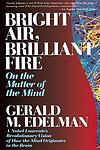
1. Bright Air, Brilliant Fire
On the Matter of the Mind
"Bright Air, Brilliant Fire" explores the complex science of human consciousness through a biological perspective. The book challenges traditional views by proposing that the mind's workings are grounded in the architecture and dynamics of the brain. The author, a Nobel laureate, uses his theory of Neural Darwinism to explain how mental phenomena emerge not from simple linear processes but through the rich interactions of a vast network of neurons. This theory suggests that the brain's structure evolves through a selection process akin to natural selection, leading to the diverse and adaptive nature of human consciousness. The book combines detailed scientific explanations with broader philosophical discussions on the nature of mind and self.
The 17155th Greatest Book of All TimePurchase from Amazon -
2. The Remembered Present
A Biological Theory of Consciousness

This book delves into the intricate workings of the human brain, exploring how consciousness arises from neural processes. It presents a theory that consciousness is not a static entity but a dynamic process that emerges from the brain's ability to categorize and integrate sensory experiences. The narrative intertwines neuroscience with philosophical insights, offering a comprehensive understanding of how the brain constructs a coherent sense of the present moment by constantly updating and integrating past experiences with current perceptions.
Purchase from Bookshop.org -
3. A Universe Of Consciousness
How Matter Becomes Imagination
This book delves into the intricate relationship between consciousness and the brain, proposing a novel theory that consciousness arises from the complex interactions of neural networks. It explores how the brain's dynamic processes give rise to subjective experiences, emphasizing the role of neural Darwinism in shaping consciousness. By integrating insights from neuroscience, psychology, and philosophy, the authors present a compelling argument for understanding consciousness as an emergent property of biological processes, challenging traditional views and offering a fresh perspective on the nature of human awareness.
Purchase from Bookshop.org