Paulo Freire
Paulo Freire was a Brazilian educator and philosopher who was a leading advocate for critical pedagogy. He is best known for his influential work, 'Pedagogy of the Oppressed,' which is considered one of the foundational texts of the critical pedagogy movement.
Books
This list of books are ONLY the books that have been ranked on the lists that are aggregated on this site. This is not a comprehensive list of all books by this author.
-
1. Pedagogy Of The Oppressed
This book is a seminal work in the field of critical pedagogy that explores the complex relationship between the oppressor and the oppressed in educational contexts. The author argues that traditional pedagogical methods perpetuate existing hierarchies and suggests a new approach called "problem-posing education," which emphasizes dialogue and critical thinking to empower learners to question and challenge oppressive systems. The text is both a critique of the way education is often used as a tool of domination and a guide for how it can instead be transformed into a practice of freedom, helping individuals to achieve self-realization and societal change.
The 8052nd Greatest Book of All TimePurchase from Bookshop.org or Amazon -
2. Teachers As Cultural Workers
Letters to Those Who Dare Teach
This insightful work delves into the transformative role of educators, emphasizing their responsibility as agents of change within the cultural and social fabric of society. It explores the dynamic relationship between teaching and learning, advocating for a pedagogy that is rooted in dialogue, critical thinking, and mutual respect. The book challenges traditional educational paradigms, urging teachers to embrace their roles as facilitators of empowerment and liberation, fostering environments where students can critically engage with the world around them and become active participants in their own learning journeys.
-
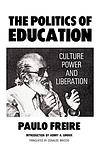
3. The Politics Of Education
Culture, Power, and Liberation
This insightful work delves into the intricate relationship between education and politics, emphasizing that education is never neutral but is deeply intertwined with societal power structures. It critiques traditional educational systems that perpetuate oppression and advocates for a transformative approach where education becomes a tool for liberation and empowerment. By encouraging critical thinking and dialogue, it seeks to awaken the consciousness of both educators and learners, urging them to challenge and change the status quo, thus fostering a more equitable and just society.
-
4. Literacy
Reading the Word and the World
This influential work explores the transformative power of literacy as a tool for social change and empowerment. It delves into the relationship between education and liberation, emphasizing the importance of critical thinking and dialogue in the learning process. The book advocates for a participatory approach to education, where learners are active participants in their own learning journey, challenging oppressive structures and fostering a deeper understanding of their social realities. Through this lens, literacy becomes a means of achieving personal and collective emancipation, encouraging individuals to question, reflect, and act upon the world around them.
-
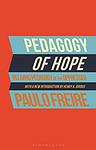
5. Pedagogy Of Hope
Reliving Pedagogy of the Oppressed
This reflective narrative delves into the transformative power of education, exploring the intricate relationship between teaching and learning. It revisits the author's earlier work, examining the profound impact of critical pedagogy on both educators and students. Through personal anecdotes and philosophical insights, the narrative underscores the importance of dialogue, empathy, and hope in fostering an educational environment that empowers individuals to challenge oppressive structures and envision a more equitable world. The narrative serves as both a memoir and a guide, inspiring educators to cultivate a practice rooted in social justice and humanization.
-
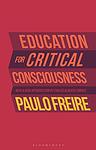
6. Education For Critical Consciousness
This influential work delves into the transformative power of education as a tool for fostering critical awareness and social change. It emphasizes the importance of dialogue and reflection in the learning process, encouraging individuals to question and challenge oppressive systems. Through a participatory approach, it advocates for education that empowers learners to become active agents in their own liberation, promoting a deeper understanding of their social reality and inspiring collective action towards a more equitable society.