Henri Lefebvre
Henri Lefebvre was a French Marxist philosopher and sociologist, best known for his work on the critique of everyday life and the production of space. His influential ideas have had a significant impact on various fields, including geography, urban studies, and cultural studies.
Books
This list of books are ONLY the books that have been ranked on the lists that are aggregated on this site. This is not a comprehensive list of all books by this author.
-
1. Critique Of Everyday Life
Introduction
The book is a pioneering work in the field of sociology that explores the profound influence of everyday life on the modes of social transformation and the production of the modern consumer society. It delves into the minutiae of daily life and its potential to be a ground for both oppression and resistance. The author critically examines the ways in which everyday activities and routines can perpetuate capitalist ideologies, yet also argues that these routines hold the potential for revolutionary change. Through this analysis, the work seeks to uncover the extraordinary within the ordinary, emphasizing the importance of critiquing and transforming everyday practices to achieve a more just and fulfilling society.
The 10309th Greatest Book of All TimePurchase from Bookshop.org or Amazon -
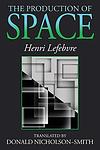
2. The Production Of Space
This seminal work explores the intricate relationship between space and society, challenging traditional perceptions of space as merely a physical entity. It delves into the idea that space is a social construct, shaped by human interactions, cultural practices, and economic systems. Through a critical examination of urban planning, architecture, and everyday life, the text argues that space is produced and reproduced through social processes, reflecting power dynamics and ideological influences. It invites readers to reconsider how spaces are designed, used, and perceived, emphasizing the role of spatial practices in shaping human experiences and societal structures.
Purchase from Bookshop.org -
3. The Missing Pieces

In this intriguing exploration of absence and presence, the narrative delves into the concept of what is missing in our lives and how these voids shape our experiences and perceptions. Through a series of philosophical reflections and personal anecdotes, the text examines the significance of gaps, whether they be in art, literature, or everyday life, and how they influence our understanding of the world. The work invites readers to contemplate the unseen and unspoken elements that, although absent, play a crucial role in defining the essence of existence.
Purchase from Bookshop.org -
4. Le Droit à La Ville, 3e éd.
An influential theoretical and political essay arguing that urban space is socially produced and should be reclaimed as a collective right: inhabitants must have the power to shape the processes of urbanization and resist its commodification under capitalism. It analyzes how the built environment, everyday life, and state and market forces interact to produce social inequalities, contrasts the use-value of urban life with the exchange-value of real estate, and calls for participatory democracy, grassroots mobilization, and a radical redesign of cities to prioritize social justice, creativity, and commonality. Blending Marxist analysis, urban sociology, and philosophy, it frames the right to the city as both a critique of contemporary urbanization and a program for emancipatory urban planning.