Paul Veyne
Paul Veyne was a renowned French historian and archaeologist, known for his work on ancient Rome and his contributions to the understanding of historical methodology.
Books
This list of books are ONLY the books that have been ranked on the lists that are aggregated on this site. This is not a comprehensive list of all books by this author.
-
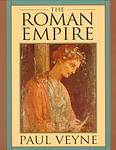
1. The Roman Empire
A Very Short Introduction
"The Roman Empire" delves into the intricate and expansive history of Rome, exploring its political, social, and cultural dynamics. The book provides a detailed examination of how Rome evolved from a small city-state to a vast empire, influencing the Western world profoundly. The author analyzes the mechanisms of power and governance within the empire, the role of military conquests and political alliances, and the complex interactions between Roman and other cultures. Additionally, the narrative discusses the daily lives of Roman citizens, the economic frameworks, and the philosophical and artistic contributions that shaped the legacy of the Roman Empire.
The 10968th Greatest Book of All TimePurchase from Bookshop.org or Amazon -
2. Foucault
His Thought, His Character

This insightful work delves into the complex and multifaceted ideas of a renowned philosopher, exploring his profound influence on the fields of history, philosophy, and social theory. The author offers a compelling analysis of the philosopher's thoughts on power, knowledge, and the self, unraveling the intricate connections between these concepts and their impact on modern intellectual discourse. Through a nuanced examination of the philosopher's writings and lectures, the book provides a comprehensive understanding of his revolutionary approach to understanding the structures that govern human societies and the ways individuals navigate them.
Purchase from Bookshop.org -
3. Bread And Circuses
Historical Sociology and Political Pluralism
An analysis of the Greco-Roman institution of euergetism—the elite practice of financing games, distributions, and public buildings—arguing that such largesse functioned less as charity than as a system of reciprocity and symbolic power that organized civic life, maintained hierarchy, and secured consent; by tracing how public generosity and spectacle mediated relations between rulers, notables, and citizens, it reframes ancient urban politics as status competition and political communication rather than welfare.
-
4. Sexo Y Poder En Roma
An incisive exploration of how Roman sexual practices were governed by status, hierarchy, and dominance rather than modern ideas of personal identity. It highlights the central divide between active and passive roles, granting male citizens broad license with slaves and prostitutes while condemning freeborn male passivity and tightly policing female chastity. Drawing on legal sources, literature, and epigraphy, it examines marriage, adultery, prostitution, pederasty, and obscenity as mechanisms that reinforced civic order and social ranking, including the impact of Augustan moral legislation. The result is a portrait of a world where sex functioned as a public language of power more than a private sphere of intimacy.
-
5. Did The Greeks Believe In Their Myths?
An Essay on the Constitutive Imagination
An exploration of how ancient Greeks related to myth, arguing they neither simply believed nor disbelieved but adopted layered, context-dependent attitudes toward stories that served civic, religious, and historical functions. It shows how allegory, skepticism, and ritual could coexist, and proposes that shared imagination constitutes social reality, drawing revealing parallels with modern ideologies and collective narratives.
Purchase from Bookshop.org -
6. Seneca
A concise biographical and analytical portrait of the Roman Stoic Seneca that follows his rise from provincial origins to influential tutor and advisor at Nero’s court, examines his philosophical writings and literary craft, and probes the tensions between his public life of political maneuvering and wealth and the moral rigor of his Stoic teachings; the book treats Seneca as a complex, sometimes contradictory figure—eloquent, ambitious, complicit in imperial power, yet capable of profound ethical reflection—and situates his career and forced death within the broader dynamics of Roman politics, culture, and intellectual history.
Purchase from Bookshop.org