Jerry A. Fodor
Jerry Alan Fodor was an American philosopher and cognitive scientist. He was known for his work in the philosophy of mind and cognitive science, particularly for his theory of the modularity of mind and his critiques of behaviorism and computational theories of mind.
Books
This list of books are ONLY the books that have been ranked on the lists that are aggregated on this site. This is not a comprehensive list of all books by this author.
-
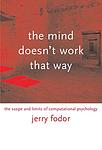
1. The Mind Doesn't Work That Way
The Scope and Limits of Computational Psychology
"The Mind Doesn't Work That Way" is a critical examination of the computational theory of mind, particularly as it relates to the field of cognitive science. The book challenges the widespread assumption that the mind functions like a computer, arguing instead that the modular and domain-specific nature of mental processes cannot be fully explained by existing computational models. The author critiques the scope and limitations of artificial intelligence and cognitive science in understanding human thought, emphasizing the complexity and richness of the human mind that these models fail to account for.
-
2. The Elm And The Expert
Mentalese and Its Semantics

This book delves into the intricate relationship between mental representation and computational theory, exploring how cognitive processes can be understood through the lens of information processing. It challenges prevailing notions in cognitive science by questioning the extent to which mental states can be equated with computational states, offering a critical examination of the assumptions underlying the computational theory of mind. Through a series of thought-provoking arguments, it seeks to clarify the limitations and potential of using computational models to explain human cognition, ultimately contributing to the broader discourse on the nature of mental representation and the mind's architecture.
Purchase from Bookshop.org -
3. Psychosemantics
The Problem of Meaning in the Philosophy of Mind
This book delves into the intricate relationship between language and thought, exploring how mental representations are structured and how they acquire meaning. It challenges traditional views by proposing that mental states are best understood as computational states of the brain, with a focus on the role of mental symbols and their semantic properties. The work critically examines the nature of concepts, the mechanisms of mental representation, and the implications for understanding human cognition, offering a compelling argument for a theory of mind that integrates philosophy, psychology, and linguistics.
Purchase from Bookshop.org -
4. Concepts
Where Cognitive Science Went Wrong
This book delves into the intricate nature of human cognition, exploring how concepts are formed, structured, and utilized in the mind. It challenges traditional views by proposing that concepts are not merely mental representations but are deeply rooted in the language and culture that shape our understanding of the world. Through a blend of philosophical inquiry and cognitive science, the work examines the interplay between innate mental faculties and experiential learning, offering a comprehensive framework for understanding the complexities of conceptual thought.
Purchase from Bookshop.org