Rashid Khalidi
Rashid Khalidi is an American historian of the Middle East, known for his expertise on Palestinian history and the modern Middle East. He is the Edward Said Professor of Modern Arab Studies at Columbia University and has authored several influential books on the subject.
Books
This list of books are ONLY the books that have been ranked on the lists that are aggregated on this site. This is not a comprehensive list of all books by this author.
-
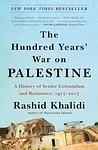
1. The Hundred Years’ War On Palestine
A History of Settler Colonialism and Resistance, 1917–2017
The book provides a detailed historical account of the Palestinian struggle against colonialism and displacement over the past century. It examines the complex and often contentious relationships between Palestinians, Zionists, and various global powers, highlighting key events and policies that have shaped the ongoing conflict. Through a combination of personal narratives and scholarly analysis, the author argues that the Palestinian experience has been marked by a series of strategic and often violent efforts to undermine their national aspirations, framing the conflict as a prolonged war against Palestinian sovereignty and identity.
The 6926th Greatest Book of All TimePurchase from Bookshop.org or Amazon -
2. Palestinian Identity
The Construction of Modern National Consciousness

This insightful work delves into the complex evolution of national identity among Palestinians, tracing its roots from the late Ottoman period through the 20th century. It explores how historical events, colonial influences, and socio-political dynamics have shaped and reshaped Palestinian identity over time. The narrative highlights the interplay between local traditions and external pressures, emphasizing the resilience and adaptability of the Palestinian people in the face of adversity. Through a rich tapestry of historical analysis and personal narratives, the book offers a nuanced understanding of the factors that have contributed to the formation of a distinct Palestinian national consciousness.
Purchase from Bookshop.org -
3. The Origins Of Arab Nationalism
This study traces the emergence of Arab national consciousness from the late Ottoman period through the interwar years, showing how modernizing reforms, urban intellectuals, and political notables transformed regional identities into political nationalism. It emphasizes the roles of Arab-speaking elites and cultural revival movements—across religious communities—as well as the influence of European ideas and wartime dislocations, rather than seeing nationalism as a spontaneous mass movement. The book also examines how World War I, the collapse of Ottoman authority, and subsequent British and French mandates (and their competing imperial policies, including Zionism in Palestine) shaped the political trajectory of Arab nationalism and its struggles for statehood and independence.
Purchase from Bookshop.org -
5. Under Siege
PLO Strategy in the Jordanian Civil War
A detailed political and historical study of the 1982 siege of Beirut that examines how the Palestinian leadership made strategic and diplomatic choices under intense military, political, and humanitarian pressure. Drawing on interviews, documents, and contemporaneous accounts, it reconstructs the debates within the PLO, the constraints imposed by regional actors and superpowers, and the tactical dilemmas faced by its commanders and politicians. The account shows how external intervention, internal divisions, and shifting alliances shaped the evacuation and its aftermath, and assesses the siege’s long-term consequences for Palestinian national politics and regional dynamics.
Purchase from Bookshop.org -
6. Sowing Crisis
The Cold War and American Dominance in the Middle East
The book traces U.S. involvement in the Middle East during the Cold War and argues that American policymakers—motivated by securing oil, maintaining Western dominance, and protecting Israel—systematically misread Arab nationalism as a Soviet threat and relied on covert operations, coups, and support for authoritarian allies. Those interventions produced long-term instability, anti-American resentment, and unintended consequences that helped shape later conflicts across the region. It offers a critical reevaluation of the Cold War narrative, insisting that many contemporary crises were sown by earlier U.S. policies rather than arising solely from internal regional dynamics.
Purchase from Bookshop.org -
7. Brokers Of Deceit
How the U.S. Has Undermined Peace in the Middle East
This is a critical history of U.S. diplomacy in the Israeli–Palestinian conflict that argues American officials repeatedly portrayed themselves as neutral mediators while in practice advancing Israeli strategic and political interests, suppressing Palestinian rights and obscuring power imbalances; drawing on archival materials and contemporary episodes from the mid-20th century through the peace process eras, it traces how policies and negotiations were shaped by U.S. strategic priorities, domestic politics, and a pattern of deception that undermined genuine prospects for justice-based resolution.
Purchase from Bookshop.org -
8. The Iron Cage
The Story of the Palestinian Struggle for Statehood
This study traces the Palestinian national movement from the late Ottoman period through the twentieth century and argues that Palestinians have been constrained by a constellation of structural forces—imperial and colonial rule, Zionist settlement and state-building, regional Arab politics, and international geopolitics—compounded by internal weaknesses such as social fragmentation, elite compromises, and the lack of durable institutions. It shows how those dynamics shaped the calamities of 1948 and 1967 and influenced later developments, including the Oslo process, which the author presents as reinforcing dependency and undermining genuine state-building. The work urges a rethinking of strategy toward constructing independent institutions, broader popular mobilization, and greater political coherence to escape these recurring constraints.
Purchase from Bookshop.org -
9. Resurrecting Empire
Western Footprints and America's Perilous Path in the Middle East
A concise, historically grounded critique of Western — particularly American — policy in the Middle East that traces a continuous pattern of imperial intervention, strategic manipulation, and support for local strongmen from the nineteenth century to the present; it argues that successive U.S. administrations have repeated colonial-era practices under new guises (oil, Cold War, counterterrorism, democracy promotion), producing violence, instability, and resentment rather than security or justice, and calls for a fundamental rethinking toward restraint, respect for sovereignty, and policies that prioritize regional autonomy and human rights.
Purchase from Bookshop.org