Raymond Geuss
Raymond Geuss is a prominent American philosopher known for his work in political philosophy and critical theory. He has been influential in discussions on realism in political theory and has written extensively on figures such as Nietzsche and the Frankfurt School.
Books
This list of books are ONLY the books that have been ranked on the lists that are aggregated on this site. This is not a comprehensive list of all books by this author.
-
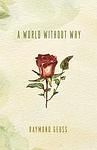
1. A World Without Why
Philosophical Reflections on the Nature of Human Inquiry
The book explores the philosophical concept of questioning the necessity of seeking reasons or justifications for everything, challenging the traditional Western emphasis on rationality and purpose. It delves into the implications of living in a world where not everything needs a "why," examining how this perspective can influence our understanding of ethics, politics, and human behavior. Through a series of essays, the author critiques the limitations of conventional moral and political theories, advocating for a more nuanced and less deterministic approach to understanding human life and society.
-
2. The Idea Of A Critical Theory
Habermas and the Frankfurt School

This insightful work delves into the philosophical underpinnings and implications of critical theory, exploring its roots in the Frankfurt School and its evolution as a tool for social critique. It examines the relationship between theory and practice, emphasizing the importance of understanding the socio-historical context in which ideas are formed and applied. The text challenges readers to consider the role of ideology in shaping societal structures and encourages a reflective approach to the pursuit of social justice and transformation.
Purchase from Bookshop.org -
3. Changing The Subject
Philosophy in the Age of Science
This thought-provoking collection of essays delves into the intricate world of philosophy, challenging conventional perspectives and encouraging readers to reconsider their understanding of various philosophical concepts. Through a series of engaging and insightful discussions, the author explores themes such as ethics, politics, and the nature of human understanding, all while questioning the assumptions that underpin traditional philosophical discourse. The work invites readers to embark on a journey of intellectual exploration, urging them to embrace a more nuanced and critical approach to the philosophical questions that shape our world.
Purchase from Bookshop.org -
4. Philosophy And Real Politics
Realism and Idealism in Political Theory
This thought-provoking work challenges the traditional approach to political philosophy by advocating for a more realistic understanding of politics. It critiques the tendency of philosophers to prioritize abstract moral principles over the complex realities of political life. The book argues for a pragmatic approach that considers the historical and social contexts in which political actions occur, emphasizing the importance of power dynamics and practical consequences in shaping political decisions. By urging a shift from idealistic theorizing to a more grounded analysis, it seeks to bridge the gap between philosophical ideals and the practicalities of real-world politics.
Purchase from Bookshop.org -
5. Who Needs A World View?
Questions whether anyone needs a single, unified outlook on the world, tracing the historically contingent rise of “worldview” talk in nineteenth-century Europe and examining how it influences—and often misdirects—philosophy, politics, and everyday reasoning. It offers a genealogical critique of the drive toward systematic coherence, advocating instead for piecemeal, context-sensitive understanding, plural perspectives, and practical judgment over comprehensive metaphysical schemes.
Purchase from Bookshop.org