Zygmunt Bauman
Zygmunt Bauman was a renowned Polish sociologist and philosopher, best known for his analyses of modernity and postmodernity. He introduced the concept of 'liquid modernity' to describe the contemporary, constantly changing society. Bauman's work has had a significant impact on sociology, cultural studies, and political theory.
Books
This list of books are ONLY the books that have been ranked on the lists that are aggregated on this site. This is not a comprehensive list of all books by this author.
-
1. Liquid Modernity
Living in an Age of Uncertainty
The book explores the concept of "liquid modernity," a term used to describe the contemporary, ever-changing state of society characterized by constant flux and uncertainty. It examines how traditional structures and institutions, such as family, work, and community, have become more fluid and less predictable, leading to a sense of instability and insecurity in individuals' lives. The author delves into the impact of globalization, technological advancements, and consumer culture on personal identity and social relationships, highlighting the challenges people face in navigating a world where permanence and long-term commitments are increasingly elusive. Through this analysis, the book provides a critical perspective on the complexities and contradictions of modern life.
The 17173rd Greatest Book of All Time -
2. Dwa Szkice O Moralności Ponowoczesnej
Rozważania o etyce w czasach niepewności

This insightful work delves into the complexities of morality in the postmodern era, exploring how traditional ethical frameworks are challenged by contemporary societal changes. It examines the fluidity and ambiguity of moral choices in a world characterized by rapid technological advancements, cultural diversity, and shifting social norms. The text argues that in this new landscape, individuals must navigate ethical dilemmas without the clear guidance of universal principles, leading to a more personalized and context-dependent approach to morality. Through a critical analysis, it highlights the need for a renewed understanding of ethical responsibility in an increasingly interconnected and uncertain world.
-
3. Sztuka życia
o szczęściu w epoce niepewności
In this thought-provoking exploration of modern life, the author delves into the complexities of navigating an ever-changing world where traditional structures and values are constantly being challenged. The narrative examines the fluidity of identity and the pursuit of happiness in a society that prioritizes individualism and consumerism. Through a series of insightful reflections, the book encourages readers to question the nature of freedom and the choices they make, ultimately urging them to find meaning and fulfillment amidst the chaos of contemporary existence.
-
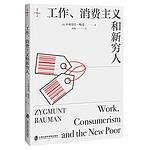
4. Work, Consumerism And The New Poor
Issues in Society
This insightful analysis delves into the transformation of society from a production-based to a consumer-driven economy, highlighting the resulting implications for social inequality and the emergence of a new class of impoverished individuals. It explores how consumerism has reshaped the social fabric, creating a divide between those who can participate in the consumer culture and those who are marginalized due to their inability to keep up with the demands of this new economic paradigm. The book critiques the societal values that prioritize consumption over production and examines the consequences for social cohesion and individual identity.
Purchase from Bookshop.org -
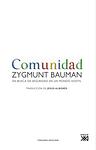
5. Community
Seeking Safety in an Insecure World
In this thought-provoking exploration, the concept of community is dissected to reveal its dual nature as both a source of comfort and a potential trap. The narrative delves into the human longing for belonging and security, juxtaposed with the inherent challenges of maintaining individuality and freedom within communal settings. Through a critical lens, the text examines how modern society grapples with the tension between the desire for close-knit connections and the fear of losing personal autonomy, ultimately questioning whether true community can exist in an increasingly fragmented world.
Purchase from Bookshop.org -
6. Does The Richness Of The Few Benefit Us All?
In this thought-provoking exploration, the author delves into the pervasive myth that the wealth accumulated by a small elite trickles down to benefit society as a whole. Through a critical analysis of economic and social structures, the book challenges the notion that the prosperity of the few naturally leads to widespread economic growth and improved living standards for the majority. It examines the widening gap between the rich and the poor, questioning the sustainability of such inequality and urging readers to reconsider the values and systems that underpin modern capitalism. The narrative encourages a reevaluation of how wealth is distributed and its impact on social cohesion and justice.
Purchase from Bookshop.org -
7. Modernity And The Holocaust
This insightful work delves into the intricate relationship between modernity and the Holocaust, challenging the conventional view that the atrocities of the Holocaust were a regression into barbarism. Instead, it argues that the Holocaust was deeply rooted in the very essence of modern civilization, highlighting how bureaucratic rationality, technological advancement, and social engineering facilitated the systematic execution of genocide. By examining the moral and ethical implications of modernity, the book prompts readers to reflect on the potential dangers inherent in the structures and ideologies of contemporary society.
Purchase from Bookshop.org -
8. Globalization
The Human Consequences
This insightful work delves into the multifaceted phenomenon of globalization, exploring its profound impact on societies and individuals worldwide. It examines the paradoxes and contradictions inherent in the global interconnectedness of economies, cultures, and politics, highlighting the disparities between the privileged and the marginalized. The narrative underscores the fluidity and uncertainty that globalization introduces, challenging traditional notions of identity, community, and security. Through a critical lens, it questions the promises of a borderless world, emphasizing the need for a more equitable and inclusive approach to global integration.
Purchase from Bookshop.org -
9. Let Your Words Be Few
In this thought-provoking exploration, the author delves into the profound impact of language and communication in shaping human relationships and societal structures. Through a series of reflective essays, the text examines the power dynamics inherent in speech, the role of silence, and the ethical responsibilities that come with verbal expression. By drawing on philosophical insights and contemporary examples, the narrative challenges readers to reconsider the value of words and the importance of mindful communication in fostering understanding and connection in an increasingly complex world.
-
10. Modernidade Líquida
In this thought-provoking exploration of contemporary society, the author delves into the concept of "liquid modernity," a term used to describe the fluid and ever-changing nature of modern life. The book examines how traditional structures and long-standing norms have dissolved, giving way to a world characterized by uncertainty, transience, and constant change. It highlights the impact of this fluidity on individual identity, relationships, and community, suggesting that the quest for stability and security is increasingly elusive in a world where everything seems to be in a state of flux. Through insightful analysis, the author challenges readers to reflect on the implications of living in such a dynamic and unpredictable era.
-
11. Strangers At Our Door
The Refugee Crisis and the End of Privacy
In this thought-provoking exploration, the author delves into the complex and often contentious issue of immigration, examining how societies perceive and react to the influx of newcomers. The narrative challenges readers to reconsider the notion of "strangers" and the societal constructs that label them as such. By weaving together historical context, sociological insights, and ethical considerations, the book invites a deeper understanding of the fear and hostility that often accompany migration, urging a shift towards empathy and inclusivity in addressing one of the most pressing global challenges of our time.
Purchase from Bookshop.org -
12. Culture In A Liquid Modern World
In this insightful exploration of contemporary society, the author delves into the concept of "liquid modernity," where traditional structures and long-standing cultural norms are increasingly fluid and transient. The book examines how globalization, technological advancements, and shifting social dynamics have led to a world where individuals face constant change and uncertainty. It highlights the challenges of maintaining identity and community in an era where stability is elusive, urging readers to reflect on the implications of living in a world where cultural and social landscapes are perpetually in flux.
Purchase from Bookshop.org -
13. Liquid Times
Living in an Age of Uncertainty
In this thought-provoking exploration of modern society, the author delves into the concept of "liquid modernity," where traditional structures and long-standing social norms are rapidly dissolving, leaving individuals to navigate an ever-shifting landscape of uncertainty and change. The book examines how globalization, technological advancements, and economic fluctuations contribute to a sense of instability, impacting personal relationships, community bonds, and identity formation. Through a series of insightful analyses, it highlights the challenges and opportunities presented by this fluid era, urging readers to adapt and find meaning amidst the chaos.
Purchase from Bookshop.org -
14. Coals Of Fire
null
-
15. State Of Crisis
A concise dialogue-driven analysis of how “crisis” has shifted from rare disruption to a permanent condition, highlighting the decoupling of power from politics in a globalized world and the resulting governance vacuum. It explores the erosion of trust, the precarization of work and everyday life, growing inequality, and the weakening of democratic institutions as consumerism and fear fragment social bonds. The text points toward renewing solidarity and reimagining citizenship as pathways to restore agency and rebuild the public sphere.
-
16. The Cartoon Introduction To Economics, Volume Ii
Macroeconomics
An accessible, cartoon-driven primer on macroeconomics that explains key concepts—GDP, inflation, unemployment, business cycles, monetary and fiscal policy, central banking, money creation, and international trade—in plain language with visual metaphors. It clarifies how policymakers respond to recessions and booms, the trade-offs between inflation and employment, and debates over stimulus, austerity, and financial regulation, using intuitive models and historical examples to make complex ideas easy for general readers to grasp.
-
17. Cartoon Introduction To Economics, Volume I
Microeconomics
An illustrated, approachable primer on microeconomic principles that uses cartoons and plain language to explain core ideas—scarcity and opportunity cost, supply and demand and market equilibrium, elasticity and marginal analysis, consumer and producer surplus, comparative advantage and trade, and market failures such as externalities and public goods—while connecting these concepts to real-world choices, incentives, and policy debates to make economics intuitive for general readers.
-
18. Liquid Surveillance
A Conversation
The book argues that contemporary surveillance has become fluid and pervasive, shifting from rigid, centralized watchfulness to flexible, data-driven practices that follow people through mobile devices, transactions and online activity; instead of a single all-seeing authority, a diffuse network of public and private actors collects, analyzes and trades streams of personal information to anticipate, sort and influence behavior. It links this transformation to broader conditions of ‘liquid’ modern life—uncertainty, consumer choice and risk management—showing how individuals are both targets and participants in surveillance through self-exposure and data exchange. The authors warn that these dynamics erode privacy, concentrate power in algorithms and corporations, and produce new forms of social sorting and insecurity that existing laws and institutions struggle to manage.