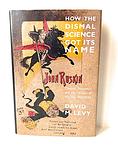
David M. Levy
Books
This list of books are ONLY the books that have been ranked on the lists that are aggregated on this site. This is not a comprehensive list of all books by this author.
-
1. How The Dismal Science Got Its Name
Classical Economics and the Ur-Text of Racial Politics
The book explores the historical and philosophical origins of the term "the dismal science" as it relates to economics, delving into the interplay between economics and moral philosophy. It examines the 19th-century debates surrounding issues like slavery, population control, and social reform, highlighting how economists like Thomas Carlyle and John Stuart Mill contributed to the discourse. Through a detailed analysis of these intellectual conflicts, the book reveals how economics became associated with pessimism and moral controversy, challenging the conventional understanding of its development as a discipline.
-
2. Street Porter And The Philosopher
Conversations on Analytical Engineering

In this thought-provoking exploration, the narrative delves into the intricate relationship between technology and human values, examining how the digital age influences our perception of time, work, and personal interactions. Through a series of engaging dialogues, the book challenges readers to reflect on the balance between efficiency and meaning in a world increasingly driven by technological advancements. It invites a deeper consideration of how modern conveniences shape our lives, urging a mindful approach to integrating technology with the timeless aspects of human experience.
-
3. The "Vanity Of The Philosopher"
From Equality to Hierarchy in Postclassical Economics
This thought-provoking work delves into the historical interplay between economics and philosophy, examining how the Enlightenment's emphasis on reason and individualism influenced economic thought. It critiques the tendency of philosophers to elevate their discipline above others, often dismissing the practical implications of economic theories. By exploring the philosophical underpinnings of economic ideas, the book highlights the importance of integrating ethical considerations into economic discourse, challenging readers to reconsider the role of philosophy in shaping economic policies and societal values.