Edward Feser
Edward Feser is an American philosopher known for his work in the philosophy of religion, metaphysics, and the history of philosophy. He is a prominent advocate of classical theism and has written extensively on the works of Thomas Aquinas.
Books
This list of books are ONLY the books that have been ranked on the lists that are aggregated on this site. This is not a comprehensive list of all books by this author.
-
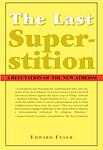
1. The Last Superstition
A Refutation of the New Atheism
The book presents a robust defense of classical theism and critiques modern atheism by revisiting the philosophical traditions of Aristotle and Aquinas. It argues that the decline of metaphysical reasoning has led to the rise of scientism and moral relativism, which the author sees as inadequate frameworks for understanding reality. Through a detailed examination of natural law and the principles of causality, the book challenges contemporary secular viewpoints and advocates for a return to a more traditional philosophical perspective that acknowledges the existence of a purposeful, rational order in the universe.
-
2. Five Proofs Of The Existence Of God
A New Look at Arguments for the Existence of God

This philosophical work delves into the classical arguments for the existence of God, presenting five distinct proofs rooted in the rich traditions of Aristotelian, Neo-Platonic, Augustinian, Thomistic, and Rationalist thought. Each proof is meticulously examined, offering a modern interpretation and defense of these age-old arguments against contemporary critiques. The book aims to demonstrate the rational basis for belief in God, engaging with both historical and modern philosophical discourse, and seeks to bridge the gap between faith and reason through rigorous analysis and logical reasoning.
Purchase from Bookshop.org -
3. Aquinas
A concise, accessible introduction to the medieval thinker’s life and system that explains his central metaphysical and theological doctrines—act and potency, essence and existence, form and matter, the analogy of being—and presents his natural-theological arguments for God’s existence alongside his account of law, virtue, and moral theology. The book situates his Aristotelian inheritance within the scholastic framework, clarifies how he reconciles faith and reason, addresses common modern objections, and argues for the continuing relevance of his metaphysics and ethical insights for contemporary philosophy and theology.
Purchase from Bookshop.org