Frank Belknap Long
Frank Belknap Long was an American writer known for his contributions to the horror and science fiction genres. He was a contemporary and friend of H.P. Lovecraft and contributed to the Cthulhu Mythos. Long's prolific career spanned several decades, during which he wrote novels, short stories, and poetry.
Books
This list of books are ONLY the books that have been ranked on the lists that are aggregated on this site. This is not a comprehensive list of all books by this author.
-
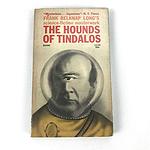
1. The Hounds Of Tindalos
In this chilling tale, a man named Halpin Chalmers becomes obsessed with exploring the mysteries of time and space through a series of dangerous experiments. His curiosity leads him to a terrifying encounter with the Hounds of Tindalos, otherworldly creatures that exist beyond the confines of normal reality and are drawn to those who disturb the fabric of time. As Chalmers delves deeper into his experiments, he finds himself pursued by these relentless, malevolent entities, culminating in a desperate struggle for survival against forces beyond human comprehension.
The 9378th Greatest Book of All TimePurchase from Amazon -
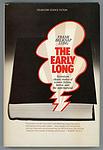
2. The Early Long
A Collection of Stories
The story is a science fiction tale set in a future where humanity has achieved interstellar travel and colonization. It follows the journey of a space explorer who encounters a mysterious and ancient alien civilization on a distant planet. As the protagonist delves deeper into the secrets of this civilization, they uncover profound truths about the nature of time, existence, and humanity's place in the universe. The narrative explores themes of discovery, the unknown, and the eternal quest for knowledge, blending elements of adventure with philosophical reflections.
The 13355th Greatest Book of All TimePurchase from Amazon -
5. Howard Phillips Lovecraft

Howard Phillips Lovecraft (US: ; August 20, 1890 – March 15, 1937) was an American writer of weird, horror, fantasy, and science fiction. He is best known for his creation of the Cthulhu Mythos, but his legacy is also apparent in terms like "Lovecraftian horror" and an enduring fandom. Born in Providence, Rhode Island, Lovecraft spent most of his life in New England. Following the institutionalization of his father in 1893, he lived affluently until his family's wealth dissipated after the death of his grandfather. Lovecraft then lived with his mother with reduced financial security until she too was institutionalized in 1919. He began to write essays for the United Amateur Press Association and in 1913 wrote a critical letter to a pulp magazine that ultimately led to his involvement in pulp fiction. He became active in the speculative fiction community and was published in several pulp magazines. Marrying Sonia Greene in 1924, Lovecraft moved to New York City and later became a central figure in a wider group of authors known as the "Lovecraft Circle". Friends in New York encouraged him to submit to Weird Tales, which became his most prominent publisher. Lovecraft's time in New York took a toll on his mental state and financial conditions. He returned to Providence in 1926 and remained active as a writer for 11 years, until his death at the age of 46. It was during this final period that Lovecraft produced some of his most popular works, including The Call of Cthulhu, At the Mountains of Madness, The Shadow over Innsmouth, and The Shadow Out of Time. Lovecraft's literary corpus is rooted in cosmicism, which was simultaneously his personal philosophy and the main theme of his fiction. Cosmicism posits that humanity is an insignificant part of the cosmos. He incorporated fantasy and science fiction elements into his stories, representing the fragility of anthropocentrism. This was tied to his ambivalent views on knowledge. His works were largely set in a fictionalized version of New England. Civilizational decline also plays a major role in his works, as he believed that the West was in decline during his lifetime. Lovecraft's early political views were conservative and traditionalist; additionally, he held a number of racist views for much of his adult life. Following the Great Depression, Lovecraft's political views became more socialist while still remaining elitist and aristocratic. Throughout his adult life, Lovecraft was never able to support himself from his earnings as an author and editor. He was virtually unknown during his lifetime, and was almost exclusively published in pulp magazines before his death. A scholarly revival of Lovecraft's work began in the 1970s, and he is now regarded as one of the most significant 20th-century authors of supernatural horror fiction. Many direct adaptations and spiritual successors followed. Works inspired by Lovecraft, adaptations or original works, began to form the basis of the Cthulhu Mythos, which utilizes Lovecraft's characters, setting, and themes.