Gottfried Burger
Gottfried August Bürger was a German poet known for his ballads and his influence on German Romanticism. He is best known for his work 'Lenore', which became a significant piece in the Sturm und Drang movement.
Books
This list of books are ONLY the books that have been ranked on the lists that are aggregated on this site. This is not a comprehensive list of all books by this author.
-
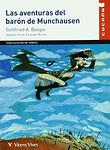
1. The Adventures Of Baron Munchausen
Narrative of His Marvellous Travels and Campaigns in Russia
This whimsical tale follows the extraordinary exploits of a charismatic nobleman who regales listeners with his unbelievable adventures. From riding cannonballs to traveling to the moon, the Baron captivates with his vivid storytelling, blending humor and fantasy. His tales, often exaggerated and fantastical, challenge the boundaries of reality and imagination, inviting readers to ponder the nature of truth and fiction. Through his adventures, the Baron embodies the spirit of adventure and the power of storytelling, leaving audiences both amused and intrigued by his larger-than-life persona.
The 3638th Greatest Book of All TimePurchase from Amazon -
2. Lenore
A Ballad
The poem tells the story of Lenore, a young woman who anxiously awaits the return of her fiancé, Wilhelm, from war. As she laments his absence and questions divine justice, a mysterious horseman arrives at midnight, claiming to be Wilhelm. Lenore eagerly joins him on a wild, supernatural ride through the night, only to discover that her companion is Death, and she is being taken to the afterlife. The narrative explores themes of love, despair, and the supernatural, ultimately serving as a cautionary tale about the dangers of defying fate and the inevitability of death.
The 9377th Greatest Book of All TimePurchase from Bookshop.org or Amazon -
3. The 5 Elements Of Effective Thinking
Learn to Think Like a Genius

The book explores practical strategies to enhance thinking and problem-solving skills by focusing on five key elements: earth, fire, air, water, and the quintessential element, change. Each element symbolizes a different aspect of thought, such as building a solid foundation of knowledge, igniting creative insights, embracing the flow of ideas, and adapting to change. Through illustrative examples and exercises, the book encourages readers to cultivate habits that lead to deeper understanding, innovative solutions, and continuous intellectual growth, ultimately empowering them to think more effectively in various aspects of life.
-
4. The Ethics Of Belief
"The Ethics of Belief" explores the moral obligations associated with forming and holding beliefs. It argues that individuals have a duty to ensure their beliefs are based on sufficient evidence and rational inquiry, rather than on wishful thinking or societal pressures. The text emphasizes the consequences of holding beliefs without proper justification, suggesting that such negligence can lead to harmful actions and societal harm. It advocates for intellectual responsibility and the pursuit of truth as essential components of ethical belief formation.
-
5. Religions In Play
null
-
6. Theory Of The Avant Garde
A Marxist-informed critique that examines how twentieth-century avant-garde movements attempted to abolish the autonomy of art by reintegrating art into social practice, analyzing Dada, Futurism, Constructivism, Surrealism and others as efforts to make art a revolutionary, communicative activity; the study argues these projects ultimately failed—either by being recuperated into cultural institutions or reduced to aesthetic novelty—and uses this history to rethink the relationship between art, society and institutional power, influencing subsequent debates on art’s political function and institutional critique.