Leonard Mlodinow
Leonard Mlodinow is a theoretical physicist and author known for his work in popular science literature. He has co-authored books with Stephen Hawking and has written extensively on topics related to physics, mathematics, and the human mind.
Books
This list of books are ONLY the books that have been ranked on the lists that are aggregated on this site. This is not a comprehensive list of all books by this author.
-
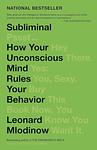
1. Subliminal
How Your Unconscious Mind Rules Your Behavior
The book explores the powerful influence of the unconscious mind on human behavior and decision-making. It delves into how subliminal processes shape our perceptions, judgments, and actions without our conscious awareness. Through a blend of scientific research and engaging anecdotes, the author illustrates how these hidden forces impact various aspects of life, from personal relationships to consumer behavior. The narrative emphasizes the significance of understanding these subliminal influences to gain better control over our choices and improve our interactions with the world.
The 12657th Greatest Book of All TimePurchase from Amazon -
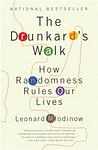
2. The Drunkard's Walk
How Randomness Rules Our Lives
This insightful exploration delves into the role of randomness and probability in shaping our lives, challenging the notion of predictability and control. Through engaging anecdotes and historical examples, it reveals how chance influences everything from personal decisions to major historical events, often in ways we fail to recognize. By examining the mathematical principles underlying randomness, it encourages readers to embrace uncertainty and reconsider the factors that contribute to success and failure, ultimately offering a fresh perspective on the unpredictability of the world around us.
-
3. Stephen Hawking
A Memoir of Friendship and Physics

This insightful biography delves into the life and mind of one of the most brilliant theoretical physicists of our time, exploring his groundbreaking contributions to cosmology and quantum mechanics. It paints a vivid picture of his personal and professional journey, highlighting the challenges he faced due to his debilitating illness and his relentless pursuit of understanding the universe. Through anecdotes and reflections, the narrative captures the essence of his genius, his humor, and his enduring impact on science and humanity.
Purchase from Bookshop.org -
4. Elastic
Flexible Thinking in a Time of Change
In this insightful exploration of the human mind, the author delves into the concept of elastic thinking, a cognitive approach that emphasizes adaptability, creativity, and open-mindedness in the face of change. Through a blend of scientific research, historical anecdotes, and real-world examples, the book illustrates how this flexible mindset can be harnessed to navigate the complexities of modern life, solve problems, and foster innovation. It encourages readers to embrace uncertainty and cultivate a mental agility that allows them to thrive in an ever-evolving world.
Purchase from Bookshop.org -
5. Euclid's Window
The Story of Geometry from Parallel Lines to Hyperspace
A lively popular-science narrative tracing the development of geometry from ancient Greek axioms through the discovery of non-Euclidean geometries and the 19th-century revolution, showing how shifts in our understanding of space—guided by ideas about light, measurement and gravity—led to Einstein’s curved spacetime and modern notions of the universe’s shape and extra dimensions. It explains key mathematical breakthroughs and the personalities behind them, and connects abstract geometric concepts to concrete physical and cosmological consequences in an accessible, story-driven way.
Purchase from Bookshop.org -
6. Emotional
How Feelings Shape Our Thinking
This book argues that emotions are not obstacles to rational thought but central to how we perceive, remember, and decide; drawing on neuroscience, psychology, and real-world experiments, it explains how unconscious feelings shape judgment, bias our thinking, influence social interactions and risk-taking, and offers practical insights for recognizing, managing, and harnessing emotions to make better decisions and improve relationships.
Purchase from Bookshop.org -
Purchase from Bookshop.org