Ian Dear
Books
This list of books are ONLY the books that have been ranked on the lists that are aggregated on this site. This is not a comprehensive list of all books by this author.
-
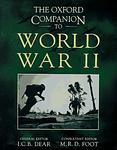
1. The Oxford Companion To World War Ii
None
This comprehensive reference work provides an in-depth exploration of World War II, covering a wide range of topics including key battles, political and military leaders, strategies, and the social and economic impacts of the war. It offers detailed entries on significant events and figures, as well as thematic essays that provide context and analysis. The book serves as an invaluable resource for understanding the complexities and global scale of the conflict, making it an essential guide for both scholars and general readers interested in the history of the Second World War.
-
2. The Postmodern Urban Condition

Exploring the intricate tapestry of urban life in the postmodern era, this insightful work delves into the complexities and contradictions that define contemporary cities. It examines the interplay between architecture, culture, and society, highlighting how urban spaces are shaped by global influences and local identities. The narrative weaves through themes of fragmentation, diversity, and the fluidity of urban experiences, offering a critical lens on how cities evolve in response to technological advancements and socio-economic shifts. Through a blend of theoretical perspectives and real-world examples, it provides a nuanced understanding of the challenges and opportunities that characterize urban living today.
Purchase from Bookshop.org -
3. Revolutionizing The Sciences
European Knowledge and Its Ambitions, 1500–1700
A concise thematic history of early modern European natural knowledge, it traces how experimentation, mathematization, instruments, print culture, and new institutions from 1500 to 1700 reshaped intellectual authority and practices. It embeds well-known discoveries within networks of patronage, commerce, religion, and academies, showing how credibility was forged through rhetoric, replication, and communal standards. Questioning the very notion of a singular “revolution,” it highlights continuities with traditions like natural magic and alchemy even as mechanistic philosophy and social norms laid foundations for modern science.
-
4. The Friendly Orange Glow
The Untold Story of the PLATO System and the Dawn of Cyberculture
A narrative history of the PLATO computer system that traces its Cold War–era origins at the University of Illinois and follows how its pioneering work in time-sharing, graphics, touchscreens, messaging and networked games fostered an influential early online community; the book shows how a mix of educators, engineers and hobbyists created many features that anticipated modern social and gaming platforms, and it examines the tensions between educational ideals, commercial pressures, and the system’s eventual decline and legacy.
Purchase from Bookshop.org