Wolfgang Streeck
Wolfgang Streeck is a German economic sociologist and emeritus director of the Max Planck Institute for the Study of Societies in Cologne. He is known for his work on the political economy of capitalism, labor relations, and institutional change.
Books
This list of books are ONLY the books that have been ranked on the lists that are aggregated on this site. This is not a comprehensive list of all books by this author.
-
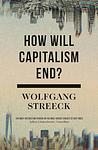
1. How Will Capitalism End?
Essays on a Failing System
The book explores the inherent contradictions and systemic issues within capitalism, arguing that these flaws could lead to its eventual demise. It examines how economic stagnation, rising inequality, and political instability are symptoms of deeper structural problems that capitalism cannot resolve. The author suggests that the relentless pursuit of profit and growth is unsustainable, leading to social and economic crises. Through a critical analysis of contemporary economic and political trends, the book questions the viability of capitalism's future and considers the potential for alternative systems.
The 17173rd Greatest Book of All TimePurchase from Bookshop.org or Amazon -
2. Social Institutions And Economic Performance

Analyzes how variations in social institutions — such as labor relations, corporate governance, welfare systems, and political structures — shape economic performance across capitalist countries; argues that institutional complementarities produce distinct national models that influence productivity, distribution, and stability, generate path-dependent trajectories, and cannot be understood by market-focused analyses alone, using comparative and historical evidence to show how institutional configurations affect policy choices and long-term outcomes.
-
3. Buying Time
The Delayed Crisis of Democratic Capitalism
A political‑economy analysis arguing that postwar democratic capitalism has repeatedly been kept afloat through a sequence of policy fixes—social spending, labor protections, credit expansion, privatization, and financialization—that have postponed crises while eroding equality, civic institutions, and political legitimacy; these “time‑buying” measures are running out of room, leaving structural contradictions that require collective political solutions rather than managerial tinkering.
Purchase from Bookshop.org