Graham Hancock
Graham Hancock is a British author and journalist known for his unconventional theories about ancient civilizations, stone monuments, and megaliths. He has written several best-selling books, including 'Fingerprints of the Gods' and 'Magicians of the Gods', which explore the possibility of a lost advanced civilization that existed thousands of years ago.
Books
This list of books are ONLY the books that have been ranked on the lists that are aggregated on this site. This is not a comprehensive list of all books by this author.
-
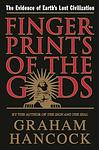
1. Fingerprints Of The Gods
The Evidence of Earth's Lost Civilization
The book explores the possibility of a lost advanced civilization that existed thousands of years ago, proposing that remnants of this civilization influenced ancient cultures around the world. Through a combination of archaeological evidence, mythological analysis, and geological data, the author suggests that this civilization was destroyed by a cataclysmic event, leaving behind clues in the form of ancient monuments and myths. The narrative challenges conventional historical timelines and encourages readers to reconsider the origins of human civilization and the potential for advanced knowledge in prehistoric times.
-
2. America Before
The Key to Earth's Lost Civilization

In this thought-provoking exploration, the author delves into the mysteries of ancient civilizations in North America, challenging conventional historical narratives. By examining archaeological evidence, indigenous myths, and cutting-edge scientific research, the book proposes that advanced societies existed on the continent long before the traditionally accepted timeline. It invites readers to reconsider the origins of human civilization, suggesting that a forgotten chapter of history may hold the key to understanding humanity's past and its potential future.
Purchase from Bookshop.org -
3. Heaven's Mirror
Quest for the Lost Civilization
This captivating exploration delves into the mysteries of ancient civilizations, proposing that these societies possessed advanced astronomical knowledge and shared a common spiritual vision. Through a blend of archaeology, mythology, and astronomy, the narrative uncovers the connections between ancient monuments and celestial alignments, suggesting that these structures were designed to mirror the heavens. The work challenges conventional historical timelines, inviting readers to reconsider humanity's past and the potential lost wisdom of our ancestors.
-
4. The Sign And The Seal
The Quest for the Lost Ark of the Covenant
This captivating exploration delves into the mystery surrounding the Ark of the Covenant, weaving together historical research, religious texts, and personal adventures. The narrative follows a gripping journey across continents, from the ancient temples of Ethiopia to the hidden chambers of Jerusalem, as it seeks to uncover the truth behind one of history's most enigmatic relics. Through a blend of scholarly investigation and thrilling storytelling, the book offers a compelling hypothesis about the Ark's fate and its profound significance in human history.
Purchase from Bookshop.org -
5. Supernatural
Meetings with the Ancient Teachers of Mankind
In this thought-provoking exploration, readers are taken on a journey through time and consciousness, delving into the mysterious realms of human evolution and the origins of spiritual experiences. The narrative weaves together archaeological findings, ancient cave art, and shamanic practices to propose that encounters with supernatural entities have shaped human culture and consciousness. By examining altered states of consciousness and the role of psychoactive substances, the book challenges conventional views on the development of religion and art, suggesting that these experiences have been pivotal in the evolution of human creativity and belief systems.
Purchase from Bookshop.org -
6. Magicians Of The Gods
The Forgotten Wisdom of Earth's Lost Civilization
In this compelling exploration of ancient mysteries, the author delves into the possibility of a lost advanced civilization that existed thousands of years ago, only to be wiped out by a cataclysmic event. Through a blend of scientific evidence, mythological tales, and archaeological discoveries, the narrative challenges conventional historical timelines and suggests that remnants of this forgotten society influenced the development of subsequent cultures. The book invites readers to reconsider the origins of human civilization and the potential lessons that can be drawn from the past to safeguard our future.
Purchase from Bookshop.org -
7. Keeper Of Genesis
A Quest for the Hidden Legacy of Mankind
A provocative reconstruction of deep prehistory that argues myths and biblical narratives preserve memories of a sophisticated Ice Age culture destroyed by a cataclysm around 12,000 years ago; drawing on archaeology (including sites such as Göbekli Tepe and early Mesopotamia), ancient maps, comparative mythology, linguistics and genetic clues, the book claims survivors transmitted knowledge to later Near Eastern societies and that mainstream chronologies have overlooked an earlier advanced phase that shaped the stories collected in Genesis.
-
8. Lego Heroes
Purchase from Bookshop.org -
10. Underworld
Flooded Kingdoms of the Ice Age
An investigative synthesis of underwater archaeology, geology, mythology, and remote-sensing evidence arguing that dramatic sea-level rises at the end of the last Ice Age submerged prehistoric coastal landscapes and may have erased advanced human settlements; drawing on dive reports, sonar and satellite imagery, sediment cores and flood myths, the book makes a provocative, controversial case for lost chapters of human history while engaging with mainstream scientific debate.
Purchase from Bookshop.org -
11. The Message Of The Sphinx
A Quest for the Hidden Legacy of Mankind
A provocative, controversial reassessment of the Giza monuments argues that geological signs of water erosion on the Sphinx, together with archaeoastronomical alignments and mythic motifs, point to a much earlier construction—around 10,500 BCE—than standard Egyptology allows; the authors bring together geology, archaeology, mythology and star lore to suggest these monuments preserve the memory or ‘message’ of a sophisticated, now-lost civilization and call for a radical reevaluation of ancient chronology and cultural transmission.
Purchase from Bookshop.org