Errol Morris
Errol Morris is an acclaimed American filmmaker known for his documentary work. His notable films include 'The Thin Blue Line' and 'The Fog of War,' which won an Academy Award for Best Documentary Feature. Morris is recognized for his innovative interviewing techniques and his exploration of complex subjects.
Books
This list of books are ONLY the books that have been ranked on the lists that are aggregated on this site. This is not a comprehensive list of all books by this author.
-
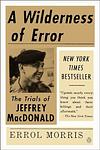
1. A Wilderness Of Error
The Trials of Jeffrey MacDonald
The book delves into the controversial case of Jeffrey MacDonald, a former Green Beret doctor convicted of murdering his family in 1970. Through meticulous research and analysis, it challenges the evidence and narratives presented during the trial, suggesting that the investigation was flawed and that MacDonald may have been wrongfully convicted. The author explores the complexities of truth and justice, highlighting how biases and errors can shape legal outcomes, ultimately questioning the reliability of the criminal justice system in determining guilt or innocence.
-
2. The Ashtray
(Or the Man Who Denied Reality)

In this thought-provoking exploration, the author delves into the intricate world of philosophical debates and the nature of truth, sparked by a personal encounter with a renowned philosopher. Through a blend of investigative journalism and philosophical inquiry, the narrative challenges the reader to reconsider the boundaries between reality and perception, while examining the profound impact of ideas on our understanding of the world. The book is a compelling journey into the heart of intellectual conflict, questioning the very foundations of knowledge and belief.
Purchase from Bookshop.org -
3. Believing Is Seeing
Observations on the Mysteries of Photography
A probing collection of essays that examines how photographs and other visual evidence shape — and are shaped by — what we already believe, arguing that seeing is not a neutral act but a negotiation between image, context, and interpretation; through historical cases, personal anecdotes, and philosophical reflection, the book shows how images can mislead, be manipulated, or be misread, and it explores the fragile boundary between objective fact and subjective perception and the consequences for truth, memory, and justice.
Purchase from Bookshop.org