Perry Anderson
Perry Anderson is a British historian and political essayist known for his work on the history of ideas and his contributions to the New Left Review. He has written extensively on topics such as Marxism, intellectual history, and international relations.
Books
This list of books are ONLY the books that have been ranked on the lists that are aggregated on this site. This is not a comprehensive list of all books by this author.
-
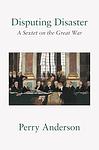
1. Disputing Disaster
**Disputing Disaster** by Perry Anderson offers an insightful exploration into the perspectives of six renowned historians who have studied the origins of the First World War. Each historian represents a different nation involved in the conflict, providing a diverse range of viewpoints and interpretations. The book delves into their analyses, highlighting the complexities and differing narratives surrounding the war's outbreak. Through this examination, Anderson presents a nuanced understanding of the historical debates and the intricate web of events leading to one of history's most significant conflicts.
The 17168th Greatest Book of All TimePurchase from Amazon -
2. Considerations On Western Marxism

A concise intellectual history and critique arguing that Marxist thought in Western Europe diverged from classical, revolutionary Marxism in response to the social and political conditions of capitalist democracies: theorists shifted their focus toward philosophy, culture and theory (as seen in the work of Lukács, Gramsci, the Frankfurt School, Sartre and Althusser), retreated from working‑class political practice after the experience of Stalinism, and thus produced a fragmented, often academicized discourse that weakened Marxism’s capacity for coherent, grounded political strategy.
Purchase from Bookshop.org -
3. The Indian Ideology
A contrarian, polemical reassessment of modern India that challenges the dominant nationalist narrative and the postcolonial consensus, arguing that founding myths about liberal democracy, secularism and the benign role of the Congress-era elite obscure deep social cleavages, institutional weaknesses and the enduring problems of caste, communalism and territorial conflict (notably Kashmir and the legacy of Partition). The book contends that successive political leaders cultivated a self-congratulatory mythology which downplays state violence, elite manipulation of history and the limits of constitutional remedies, and it calls for a more critical, historically grounded appraisal of how Indian political institutions and social hierarchies actually function.
Purchase from Bookshop.org