Cass R. Sunstein
Cass R. Sunstein is an American legal scholar, particularly known for his work in the fields of constitutional law, administrative law, and behavioral economics. He has authored numerous books and articles and has served in various academic and governmental roles, including as the Administrator of the White House Office of Information and Regulatory Affairs during the Obama administration.
Books
This list of books are ONLY the books that have been ranked on the lists that are aggregated on this site. This is not a comprehensive list of all books by this author.
-
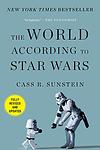
1. The World According To Star Wars
The Force of Ideas
This engaging exploration delves into the cultural, political, and philosophical impact of the iconic Star Wars saga, examining how its themes resonate with real-world issues and human experiences. Through a blend of personal anecdotes, historical context, and insightful analysis, the narrative reveals how the series reflects universal truths about family, power, and the struggle between good and evil. It also highlights the franchise's influence on society and its role in shaping modern mythology, offering a fresh perspective on why Star Wars continues to captivate audiences across generations.
The 17175th Greatest Book of All TimePurchase from Amazon -
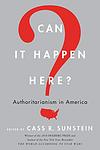
2. Can It Happen Here?
Authoritarianism in America
This thought-provoking collection of essays explores the possibility of authoritarianism taking root in the United States, drawing parallels with historical and contemporary global examples. Through a diverse range of perspectives from leading scholars and thinkers, the book examines the fragility of democratic institutions and the potential threats posed by political polarization, economic inequality, and the erosion of civil liberties. It challenges readers to reflect on the resilience of American democracy and the steps necessary to safeguard it against the rise of tyranny.
-
3. Simpler
The Future of Government

In this insightful exploration of behavioral economics and public policy, the author delves into how simplifying complex systems can lead to more effective governance and improved societal outcomes. By examining the principles of "nudging," the book illustrates how small changes in the way choices are presented can significantly influence decision-making, leading to better health, financial, and environmental behaviors. The narrative underscores the importance of making information accessible and decisions easier for individuals, ultimately advocating for a more streamlined approach to policy-making that prioritizes human behavior and psychology.
Purchase from Bookshop.org -
4. Wiser
Getting Beyond Groupthink to Make Groups Smarter
In this insightful exploration of decision-making, the book delves into the dynamics of group behavior and how collective intelligence can be harnessed to make better choices. It examines the pitfalls of groupthink and the influence of social pressures, offering strategies to enhance group deliberations and improve outcomes. By analyzing real-world examples and psychological research, the book provides a comprehensive guide to fostering environments where diverse perspectives are valued, ultimately leading to wiser, more informed decisions.
Purchase from Bookshop.org -
5. How Change Happens
A concise examination of why societal change often occurs in sudden bursts rather than gradually, focusing on how social norms, preference falsification, and reputational or informational cascades transform small signals into sweeping shifts. It explains how law, institutions, and information flows—including social media, transparency mandates, and subtle policy nudges—can trigger tipping points that reshape beliefs and behavior. Offering pragmatic guidance, it highlights ethical constraints, the dangers of polarization and manipulation, and the importance of safeguarding free expression while steering norms toward greater welfare.
Purchase from Bookshop.org -
6. Conformity
The Power of Social Influences
This book examines how social influences powerfully shape beliefs and behavior, showing how informational and normative pressures produce cascades, herding, echo chambers, and widespread conformity that can yield both useful coordination and serious error. Drawing on experiments, case studies, and legal and behavioral research, the author explains mechanisms such as social signals, reputational incentives, and group dynamics, documents harms like suppression of dissent, misinformation, and polarization, and surveys contexts from juries and markets to online platforms and politics. He argues that institutions, laws, and design choices can amplify or curb conformity, and offers practical recommendations—protecting independent voices, structuring deliberation, encouraging viewpoint diversity, and using legal and choice‑architecture tools—to limit harmful conformity while preserving beneficial social coordination.
Purchase from Bookshop.org -
7. Sludge
What Stops Us from Getting Things Done and What to Do About It
A focused examination of how needless frictions—paperwork, delays, unclear choices, and bureaucratic hassles—block people from accessing benefits, making better decisions, and acting on their intentions; using behavioral science and real-world examples, it diagnoses where sludge arises, explains the harms it causes, distinguishes useful safeguards from harmful obstacles, and proposes practical reforms and design principles to reduce friction and improve outcomes in policy, markets, and everyday life.
Purchase from Bookshop.org -
8. Impeachment
A Citizen's Guide
A concise, citizen-focused examination of impeachment as a constitutional mechanism for addressing abuses of public trust, explaining its legal foundations, historical practice, and the difference between criminal liability and political accountability; the book analyzes past impeachment episodes, lays out standards and procedures for when removal is appropriate, and offers practical advice for lawmakers and the public to use the tool responsibly while guarding democratic institutions against partisan misuse.
Purchase from Bookshop.org -
9. #Republic
Divided Democracy in the Age of Social Media
An analysis of how contemporary information environments—particularly social media and personalized algorithms—encourage echo chambers and group polarization, undermining shared facts and constructive public deliberation; it draws on social science to explain why people cluster into like-minded groups and why this produces more extreme views, then argues that both platform design and public policy can and should promote cross-cutting exposure and healthier civic norms, offering practical proposals (from algorithmic tweaks to regulatory and educational interventions) aimed at reducing fragmentation while balancing free expression and democratic pluralism.
Purchase from Bookshop.org