Robert P. George
Robert P. George is an American legal scholar, political philosopher, and public intellectual. He is a professor at Princeton University and is known for his work in moral and political philosophy, particularly in the areas of natural law, ethics, and constitutional law.
Books
This list of books are ONLY the books that have been ranked on the lists that are aggregated on this site. This is not a comprehensive list of all books by this author.
-
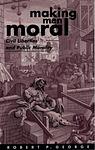
1. Making Men Moral
Civil Liberties and Public Morality
This thought-provoking work delves into the complex relationship between law, morality, and individual freedom, challenging the prevailing notion that legal systems should remain neutral on moral issues. It argues that laws play a crucial role in shaping societal values and that they should actively promote moral virtues to foster a just and cohesive community. By examining historical and philosophical perspectives, the book critiques liberal ideologies that prioritize personal autonomy over collective moral standards, advocating for a legal framework that supports the moral development of individuals while balancing the demands of a pluralistic society.
-
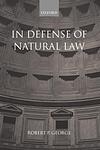
2. In Defense Of Natural Law
This book presents a compelling argument for the relevance and importance of natural law theory in contemporary moral and political discourse. It explores the philosophical underpinnings of natural law, emphasizing its role in shaping ethical principles that transcend cultural and temporal boundaries. Through a series of essays, the author critiques modern legal positivism and relativism, advocating for a return to objective moral truths as a foundation for justice and human rights. The work serves as a robust defense of natural law's enduring significance in guiding human conduct and informing legal systems.
-
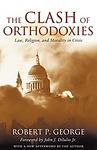
3. Clash Of Orthodoxies
Law, Religion, and Morality in Crisis
This thought-provoking work delves into the cultural and moral conflicts that define contemporary society, examining the tension between secular liberalism and traditional moral principles. Through a series of essays, the author challenges prevailing secular ideologies, advocating for a return to foundational ethical values rooted in natural law and religious teachings. The book offers a rigorous defense of conservative viewpoints on issues such as marriage, bioethics, and human rights, encouraging readers to critically evaluate the philosophical underpinnings of modern societal norms.
-
4. Conscience And Its Enemies
Confronting the Dogmas of Liberal Secularism
This thought-provoking work delves into the complex interplay between moral conscience and contemporary societal challenges, exploring how traditional values and principles are often at odds with modern ideologies. Through a series of essays, the author examines the philosophical and ethical foundations of conscience, arguing for its essential role in safeguarding human dignity and freedom. The book critiques the growing trend of relativism and the erosion of moral absolutes, advocating for a return to a more principled approach to public discourse and policy-making. It serves as a call to action for individuals to uphold their moral convictions in the face of cultural and political pressures.
-
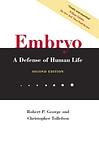
5. Embryo
This thought-provoking work delves into the ethical, philosophical, and scientific dimensions of human embryology, exploring the moral status of the human embryo. It presents a compelling argument for the inherent dignity and rights of embryos from the moment of conception, challenging prevailing views in bioethics and public policy. Through a meticulous examination of biological facts and moral reasoning, the book seeks to bridge the gap between science and ethics, urging readers to reconsider the implications of embryonic research and reproductive technologies on human dignity and moral responsibility.