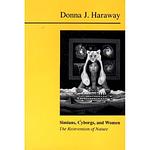
Donna J. Haraway
Donna J. Haraway is a prominent American scholar in the field of science and technology studies, known for her work on the intersections of gender, technology, and nature. She is best known for her essay 'A Cyborg Manifesto' and her contributions to feminist theory and the philosophy of science.
Books
This list of books are ONLY the books that have been ranked on the lists that are aggregated on this site. This is not a comprehensive list of all books by this author.
-
1. Simians, Cyborgs, And Women
The Reinvention of Nature
This influential work explores the intersections of feminism, science, and technology, challenging traditional boundaries and hierarchies. Through a series of essays, it critiques the patriarchal structures embedded in scientific discourse and advocates for a more inclusive and interconnected understanding of identity. The text introduces the concept of the "cyborg" as a metaphor for transcending binary oppositions, such as human versus machine and nature versus culture, proposing a hybrid existence that embraces multiplicity and fluidity. It calls for a reimagining of social and political structures to foster more equitable and diverse futures.
-
2. Manifesto Cyborg. Donne, Tecnologie E Biopolitiche Del Corpo
Donne, Tecnologie E Biopolitiche Del Corpo

This influential work explores the intersections of feminism, technology, and biopolitics, challenging traditional boundaries between human and machine. It presents the concept of the "cyborg" as a metaphor for a new kind of identity that transcends conventional categories of gender and biology. By examining how technology reshapes our understanding of the body and identity, the text advocates for a more inclusive and fluid approach to identity politics, encouraging readers to embrace hybridity and complexity in the face of technological advancements.
-
3. A Manifesto For Cyborgs
Science, Technology, and Socialist-Feminism in the Late Twentieth Century
A feminist essay that uses the figure of the cyborg — a hybrid of machine and organism — to tear down rigid dualisms (human/machine, nature/culture, male/female) and to argue against essentialist identities, proposing instead pragmatic, coalition-based politics grounded in affinity and situated knowledges; it reads technoscience as both a site of domination and a resource for feminist socialist transformation, urging strategic, ironic partial identities and new forms of solidarity to resist existing power structures.