Ha-Joon Chang
Ha-Joon Chang is a South Korean institutional economist specializing in development economics. He is known for his critical views on neoliberal economics and globalization, and has authored several influential books, including 'Kicking Away the Ladder' and '23 Things They Don't Tell You About Capitalism'.
Books
This list of books are ONLY the books that have been ranked on the lists that are aggregated on this site. This is not a comprehensive list of all books by this author.
-
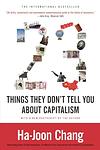
1. 23 Things They Don't Tell You About Capitalism
The Myth-Busting Book That Will Change the Way You Think About the Economy
This insightful book challenges conventional economic wisdom by presenting a series of thought-provoking arguments that debunk popular myths about capitalism. It offers a critical examination of the free market ideology, highlighting how it often fails to deliver on its promises of efficiency and prosperity. Through a blend of historical analysis and contemporary examples, the book reveals the hidden truths about economic policies, globalization, and the role of government, urging readers to reconsider their understanding of how economies function and the impact of capitalism on society.
-
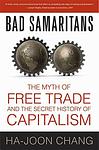
2. Bad Samaritans
The Myth of Free Trade and the Secret History of Capitalism
This thought-provoking work challenges the conventional wisdom of free-market economics, arguing that the policies often prescribed by wealthy nations and international organizations can hinder the development of poorer countries. By examining historical examples and economic data, the book reveals how many of today's prosperous nations, including the United States and the United Kingdom, utilized protectionist measures during their own development phases. It advocates for a more nuanced approach to economic policy, suggesting that developing nations should have the freedom to implement strategies tailored to their unique circumstances, rather than adhering strictly to the one-size-fits-all prescriptions of neoliberal economics.
-
3. Edible Economics
A Hungry Economist Explains the World

In this engaging exploration of global economics, the author uses the universal language of food to unravel complex economic concepts, making them accessible and relatable to readers. By drawing parallels between culinary practices and economic principles, the book offers a fresh perspective on how economies function and the impact of policies on everyday life. Through a series of vivid anecdotes and insightful analysis, it challenges conventional wisdom and encourages readers to rethink their understanding of economic systems, all while highlighting the interconnectedness of global markets and cultures.
Purchase from Bookshop.org -
4. 23 Ting De Ikke Forteller Deg Om Kapitalismen
This insightful book challenges the conventional wisdom surrounding capitalism by debunking common myths and presenting a more nuanced perspective on the global economic system. Through 23 thought-provoking chapters, it exposes the hidden truths and contradictions of capitalism, arguing that the free market is not as free as it seems and that government intervention is often necessary for economic stability and growth. The author encourages readers to question the status quo and consider alternative approaches to economic policy, emphasizing the importance of historical context and the role of institutions in shaping economic outcomes.
-
5. The East Asian Development Experience
The Miracle, the Crisis and the Future
A concise, critical reappraisal of the so‑called East Asian miracle, this study argues that the region’s rapid industrialization—particularly in Japan, South Korea, Taiwan, and Singapore—was driven by active state guidance, strategic protection, and targeted industrial policy rather than unfettered free markets. It explains how tools like infant‑industry support, export discipline, directed credit, and technology acquisition built domestic capabilities and enabled continual upgrading. It also reassesses the 1997 financial crisis and distills practical lessons for latecomer economies on sequencing reforms, balancing openness with learning, and designing institutions that foster long‑term development.
-
6. Kicking Away The Ladder
Development Strategy in Historical Perspective
This work argues that today’s wealthy countries became industrialized through protectionism, state guidance, and selective intervention—then later promoted free-market orthodoxy that limits similar tools for poorer nations. Drawing on historical cases from Britain, the United States, Germany, and others, it shows how tariffs, subsidies, and policy experimentation nurtured infant industries. It critiques international rules that restrict policy space for latecomers and urges a pragmatic, context-specific approach to development rather than one-size-fits-all prescriptions.
Purchase from Bookshop.org -
7. 23 Things They Don't Tell You About Capitalism
A concise, provocative rebuttal of popular free-market myths that shows capitalism is shaped by history, institutions and political choices rather than inevitable market laws. It debunks claims that markets are always efficient, that government intervention necessarily harms growth, and that globalization and unfettered free trade uniformly benefit poor countries, arguing instead for pragmatic, historically informed policies — including regulation, industrial policy and selective protection — to promote development, stability and reduced inequality.
Purchase from Bookshop.org