Parag Khanna
Parag Khanna is a leading global strategy advisor, world traveler, and best-selling author known for his work on global connectivity and geopolitics.
Books
This list of books are ONLY the books that have been ranked on the lists that are aggregated on this site. This is not a comprehensive list of all books by this author.
-
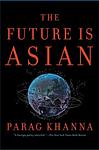
1. The Future Is Asian
Commerce, Conflict, and Culture in the 21st Century
The book explores the profound shift in global power dynamics as Asia emerges as the dominant force in the 21st century. It delves into the region's rich tapestry of cultures, economies, and political systems, highlighting how Asian countries are increasingly setting the pace in technology, trade, and diplomacy. The narrative challenges Western-centric perspectives, emphasizing the interconnectedness of Asian nations and their collective influence on global affairs. It paints a picture of a future where Asia's diverse and dynamic societies play a pivotal role in shaping the world's economic and geopolitical landscape.
-
2. Move

Argues that human mobility is the defining force of our era, driven by economic opportunity, climate change, aging populations, digital connectivity and political instability; it surveys contemporary migration patterns, dispels common myths about migrants as threats, and proposes practical policy responses—portable rights, new visa models, urban planning and infrastructure investment, regional cooperation and diaspora engagement—to better manage flows and harness migrants’ economic and social contributions while rethinking borders, citizenship and governance for more resilient, prosperous societies.
Purchase from Bookshop.org -
3. Connectography
Mapping the Future of Global Civilization
A view of the twenty-first-century world as an interconnected web in which infrastructure—transport corridors, energy grids, fiber-optic networks and supply chains—redefines power more than traditional borders or armies; economic hubs, corridors and megacities linked by trade, investment and migration create new forms of cooperation and competition, making connectivity the primary driver of prosperity, security and conflict and suggesting that stable futures depend on building and managing networks rather than reinforcing territorial sovereignty.
Purchase from Bookshop.org